The Brief:
Create a suite of prints that consider A Collection, A Sequence and/or A Series as the driving theme, using bookbinding, a solander box or other collecting/connecting device to produce a resolved artwork.
The Concept
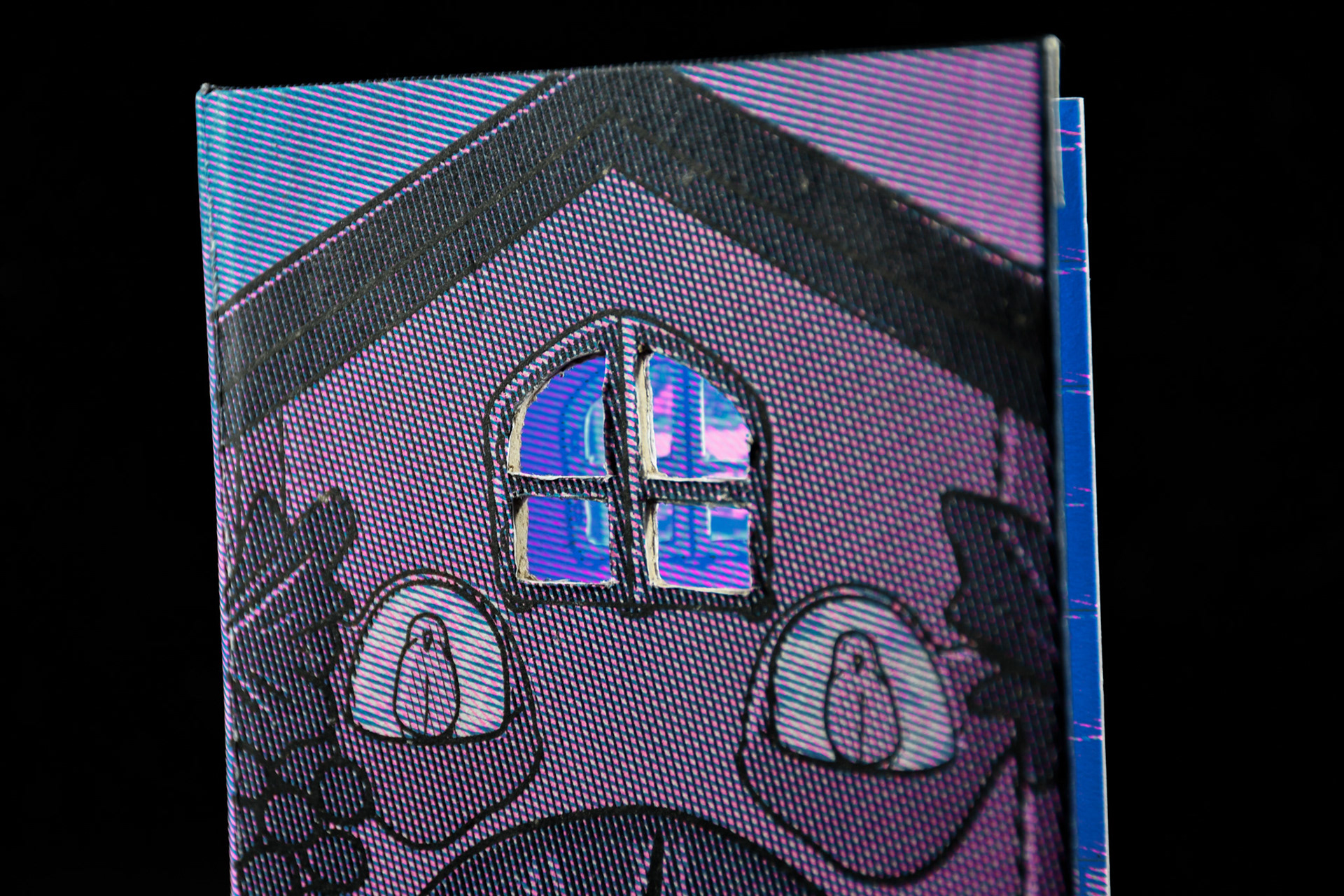
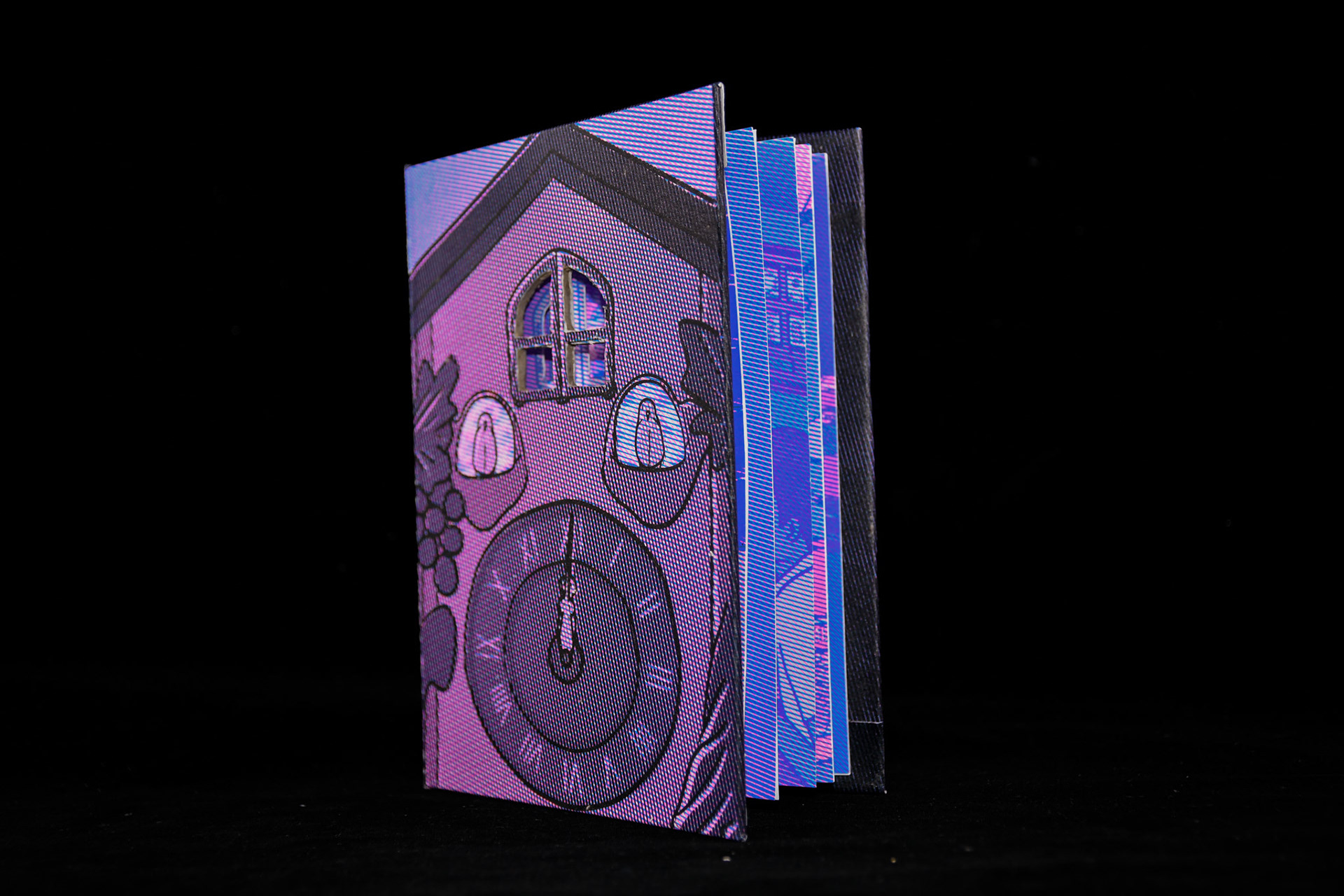
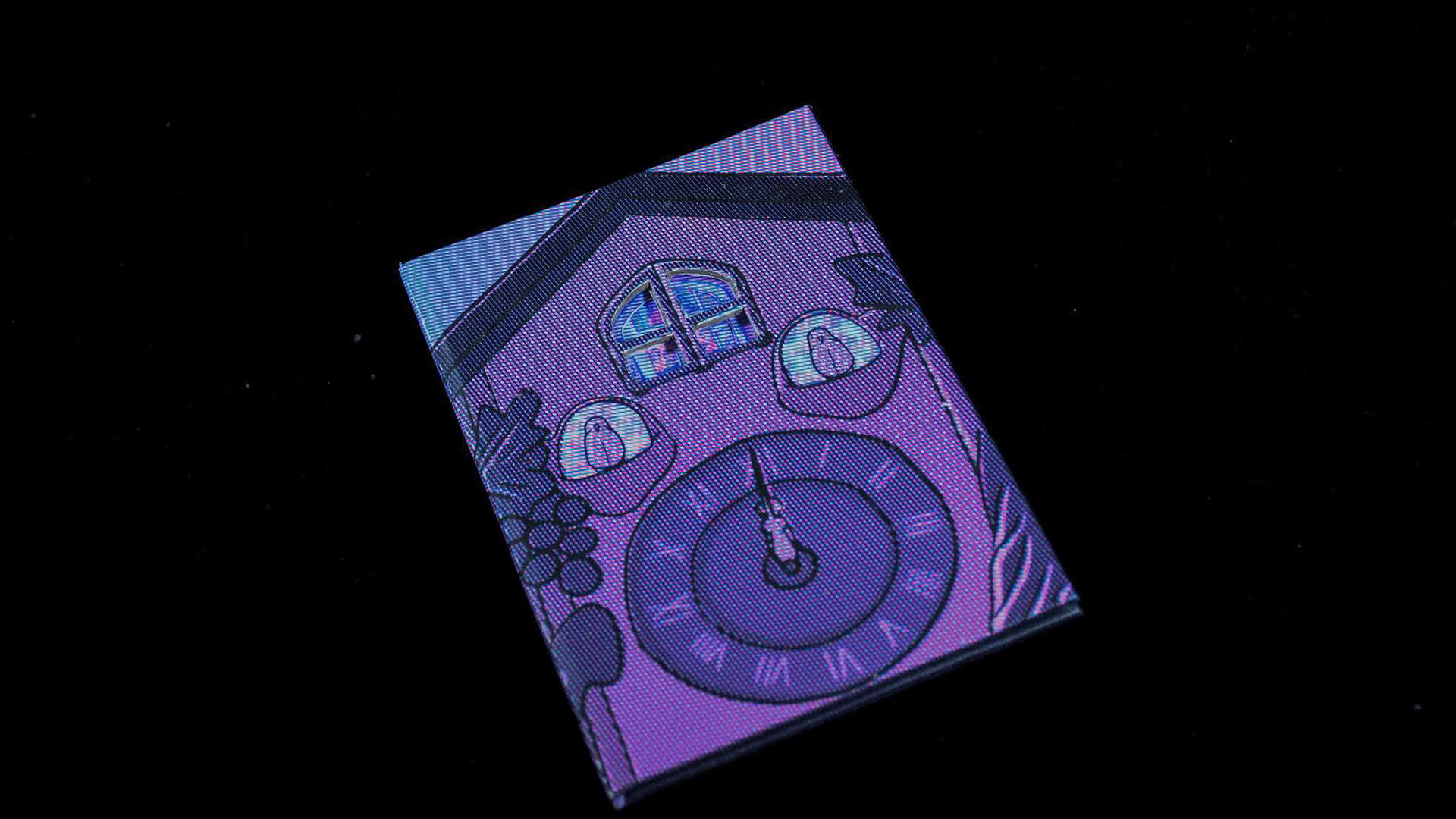
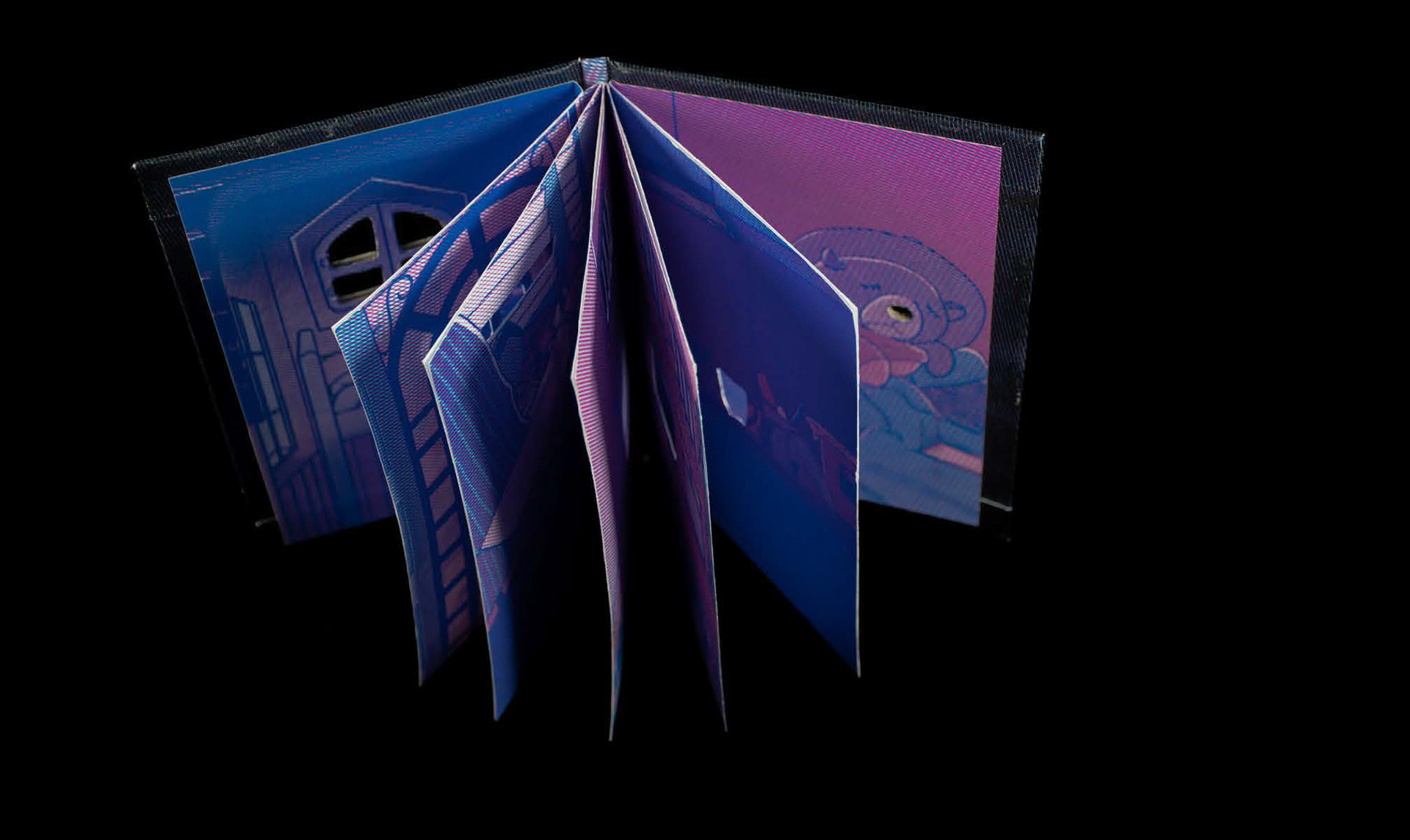
Inspired by the memory of my mother reading Enid Blyton’s books as bedtime stories, The Magical Door and other stories (TMDAOS) is a screen-printed series revisiting moments from my life. Building onto bedtime stories, TMDAOS plays with sleep and wake- the front cover features a cuckoo clock from my childhood home striking twelve, indicating bedtime, while the back cover features someone wide-eyed in bed.
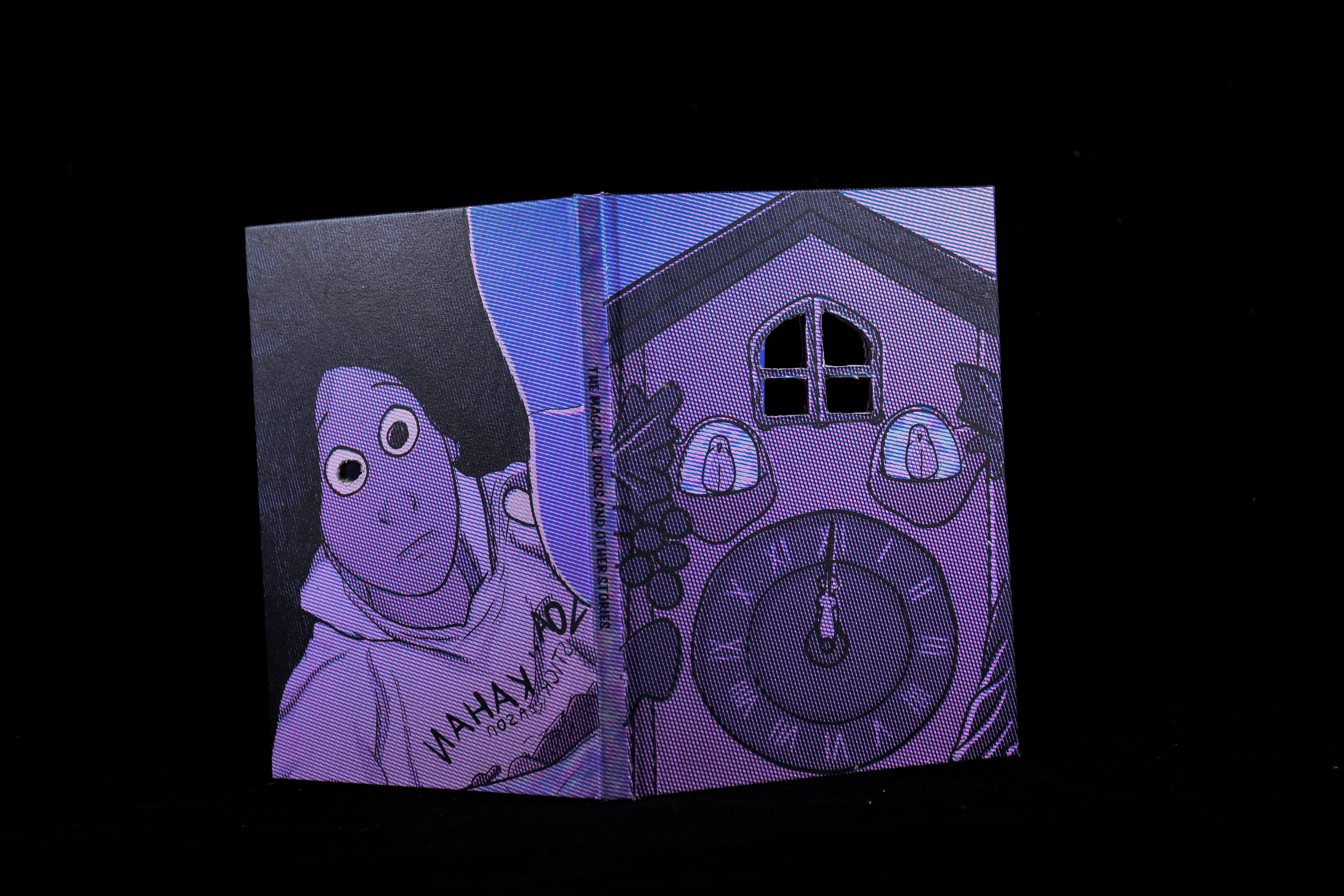
Wake (Left/Back cover) and Bedtime (Right/Front cover)
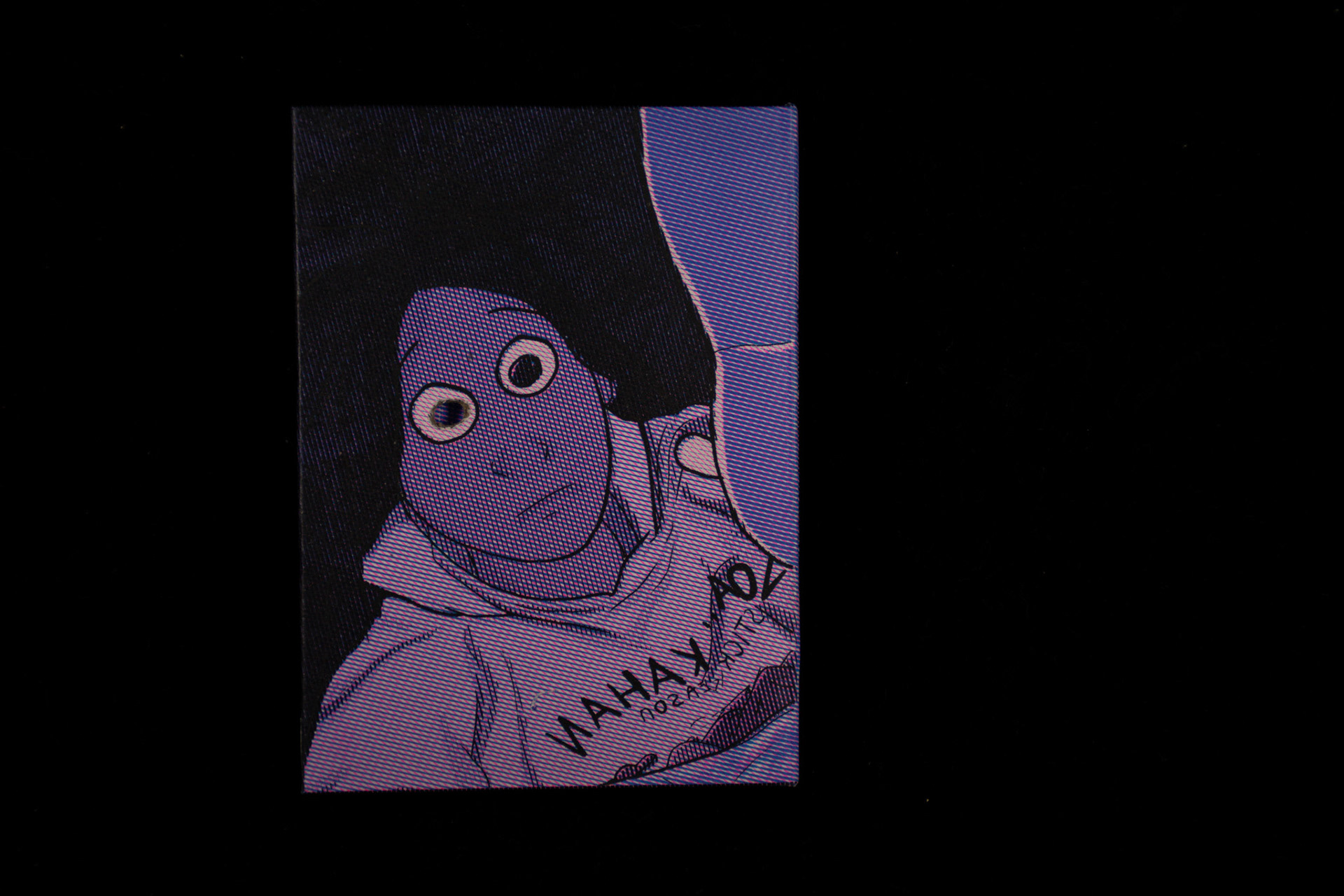
Wake (Back cover)
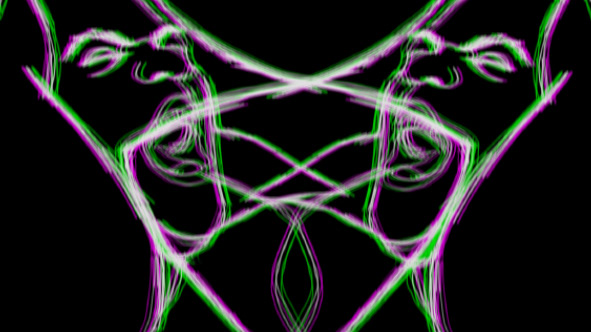
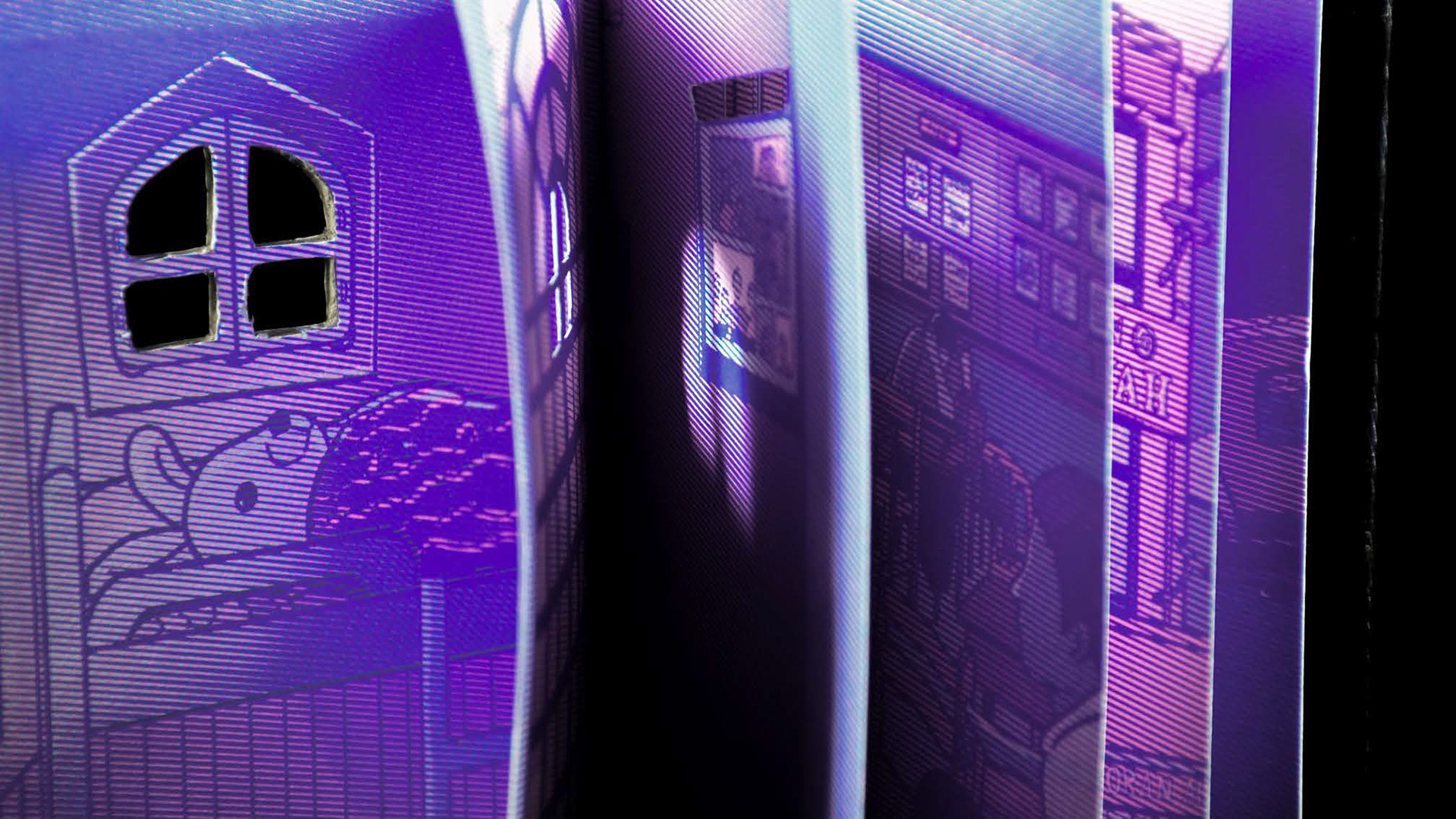
Its contents therefore allude to dreams, depicting moments from my childhood to the present. Where the cover is comparatively darker in colour, alluding to a grounded present reality (Cyan, Magenta, Black and pure Black linework) the contents are printed using only cyan and magenta channels, creating vivid dreamscape of blues and pinks. Lines were used as bitmaps, yielding a somewhat psychedelic effect when looked at for extended periods of time, reinforcing the idea of dreams and memory fragmentation.
Scenes:
1. Sylvania: A dollhouse I own to this day, featuring homemade paper furniture.
2. Bandar Country Homes: My childhood home in Malaysia.
3. SMK Taman Desa: My high school in Malaysia.
4. Al-Bidayah: A Mamak (24/7 eatery back home) I frequented often during my adolescence.
5. Kitchen: The kitchen in my current apartment.
6. Bedroom: A realistic view of how messy my current bedroom is during the tail-end of a semester.
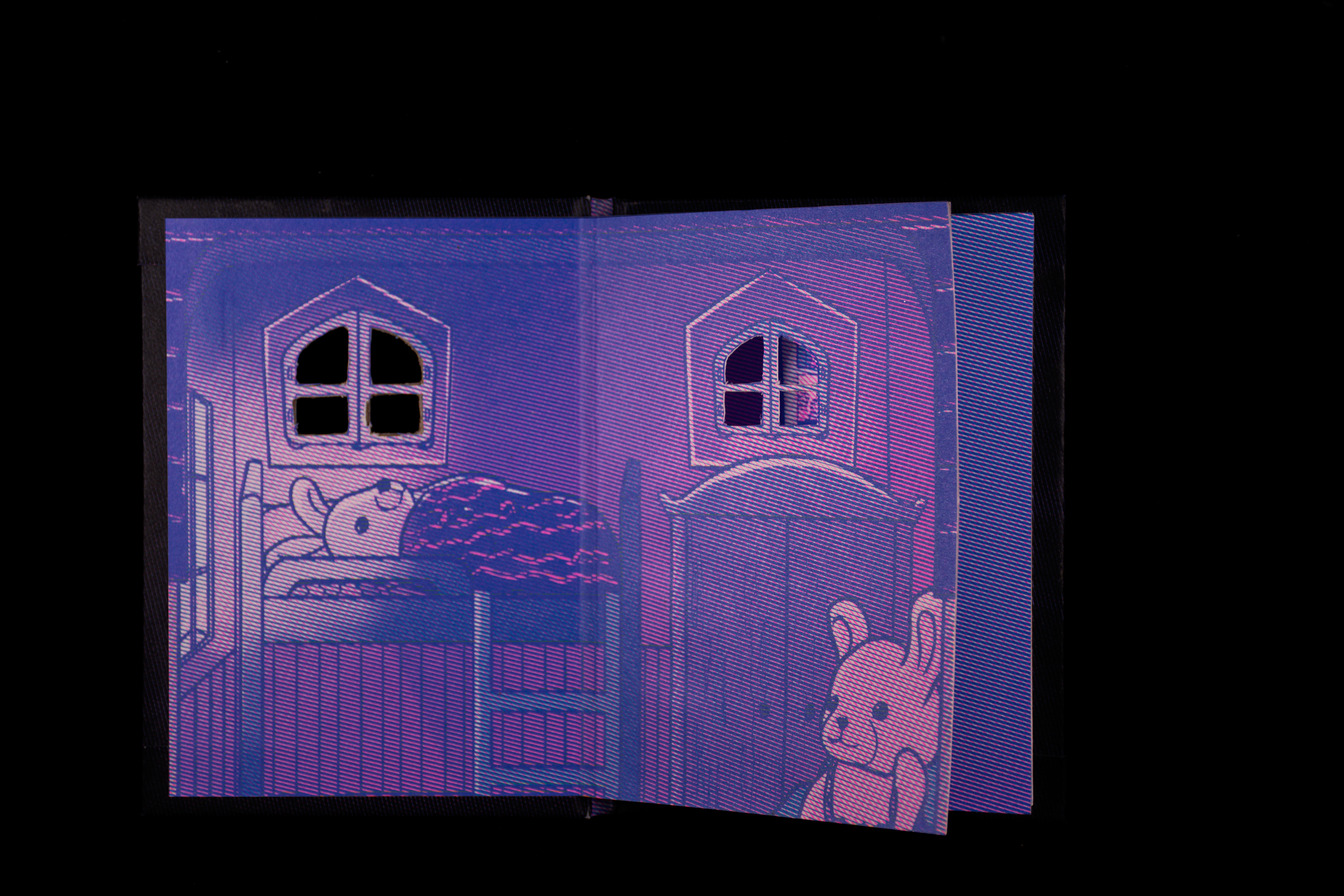
Sylvania
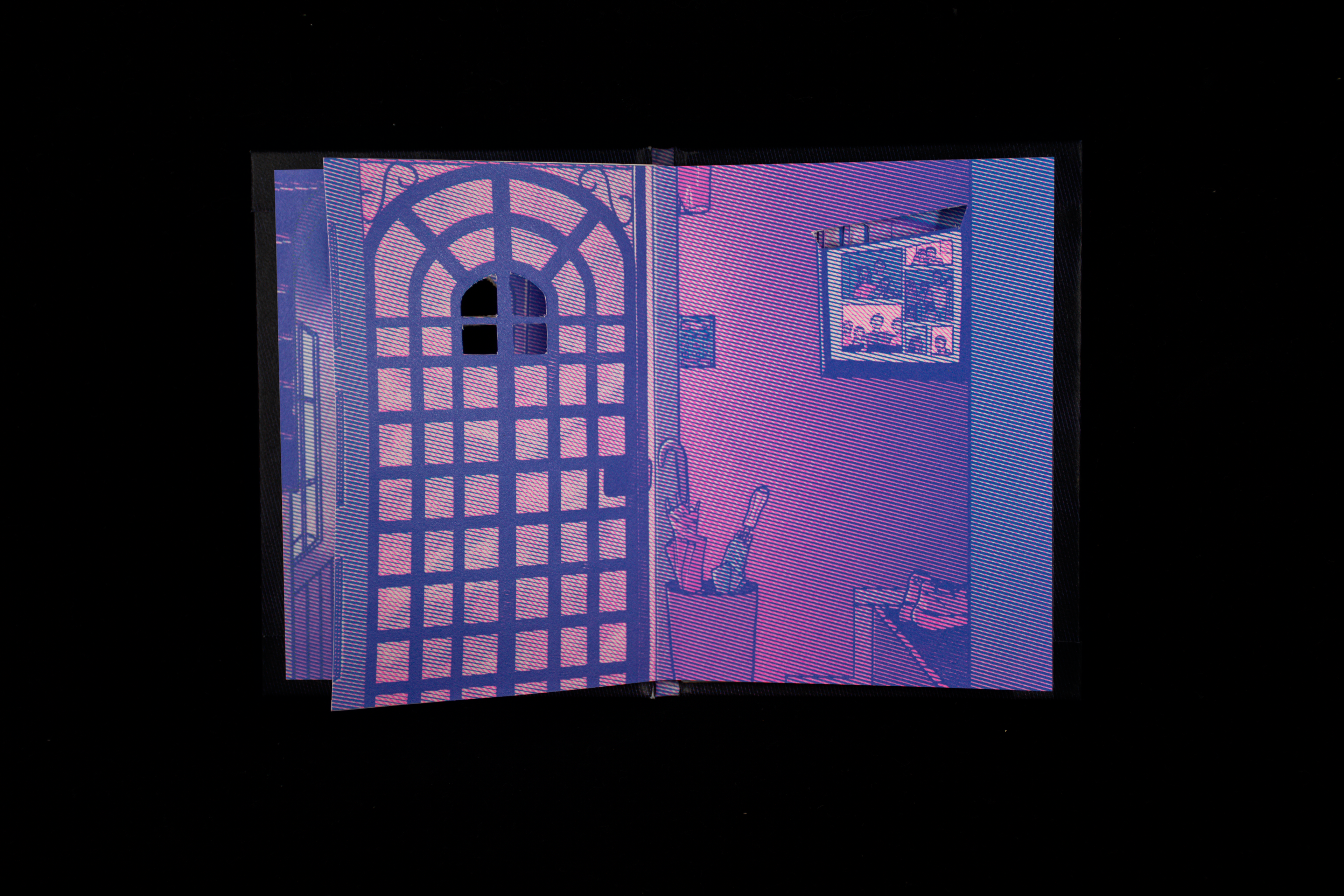
Bandar Country Homes
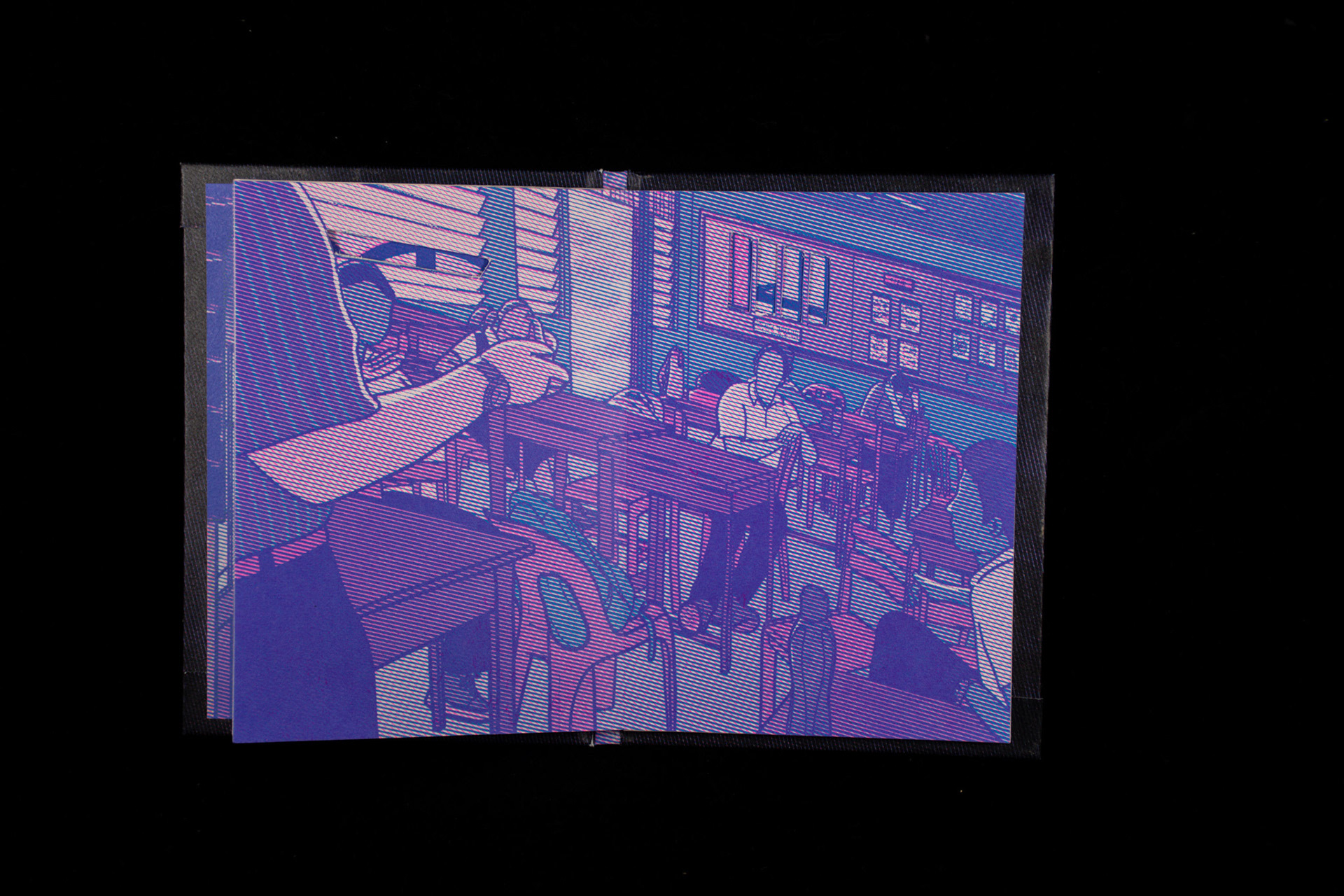
SMK Taman Desa
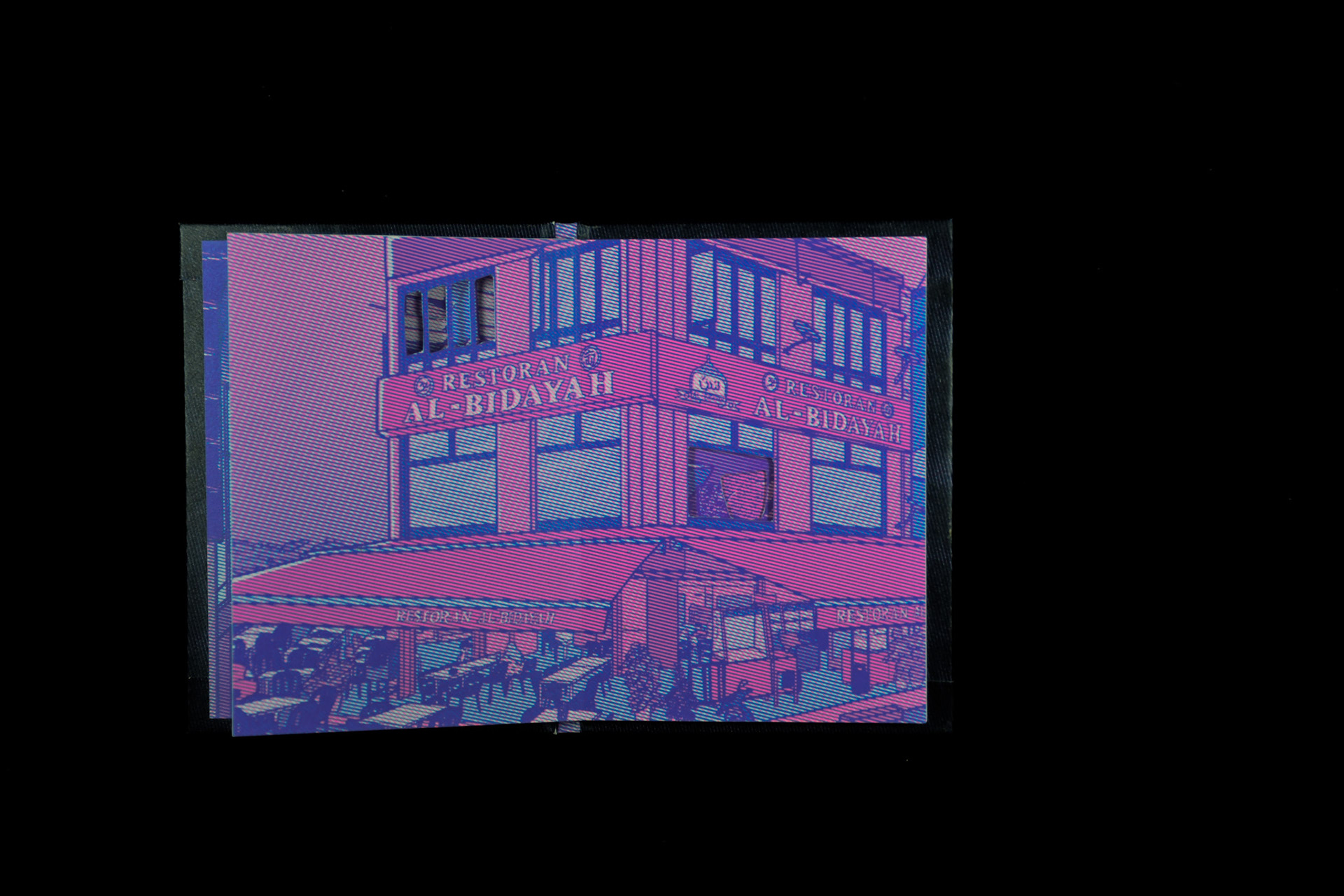
Al-Bidayah
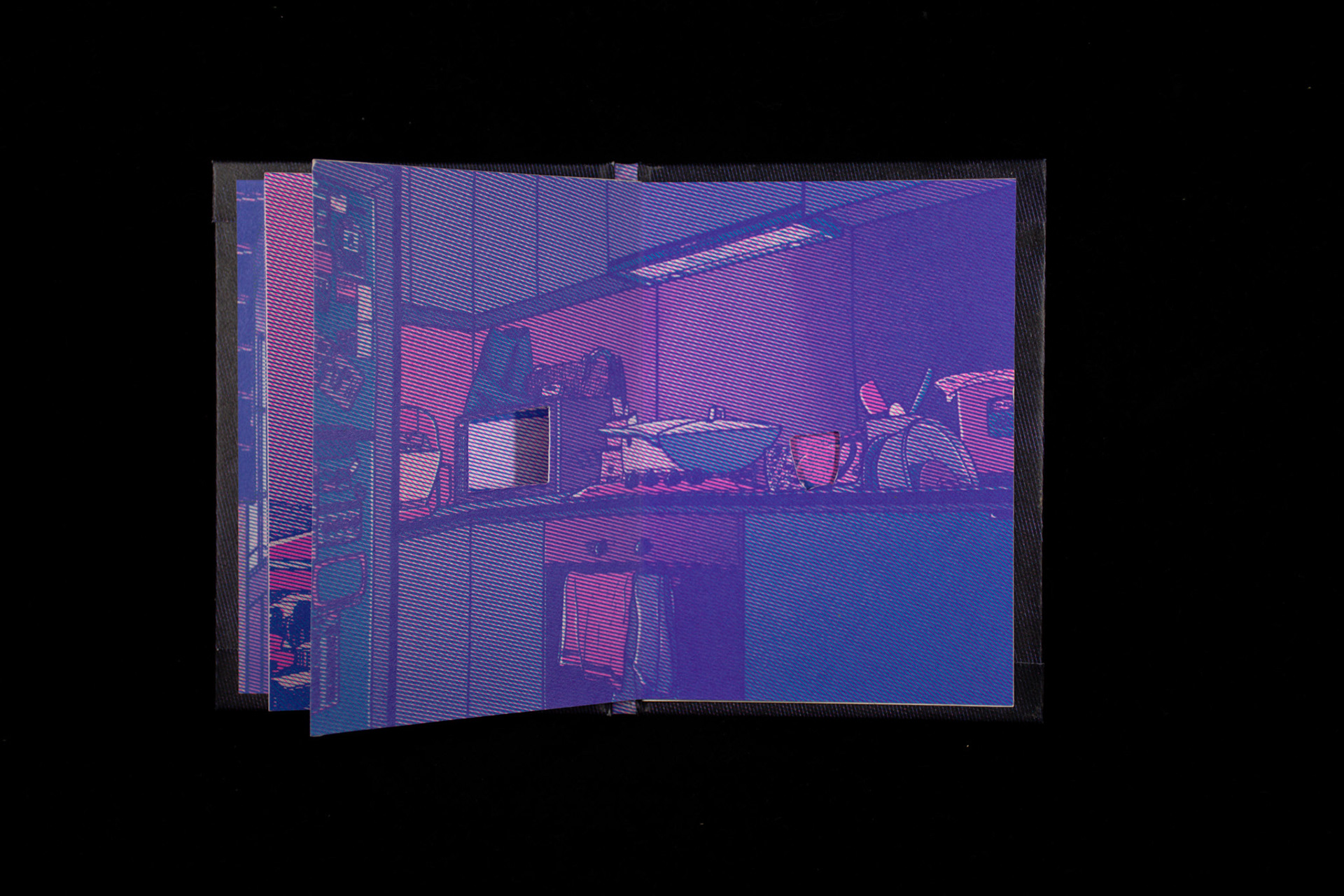
Kitchen
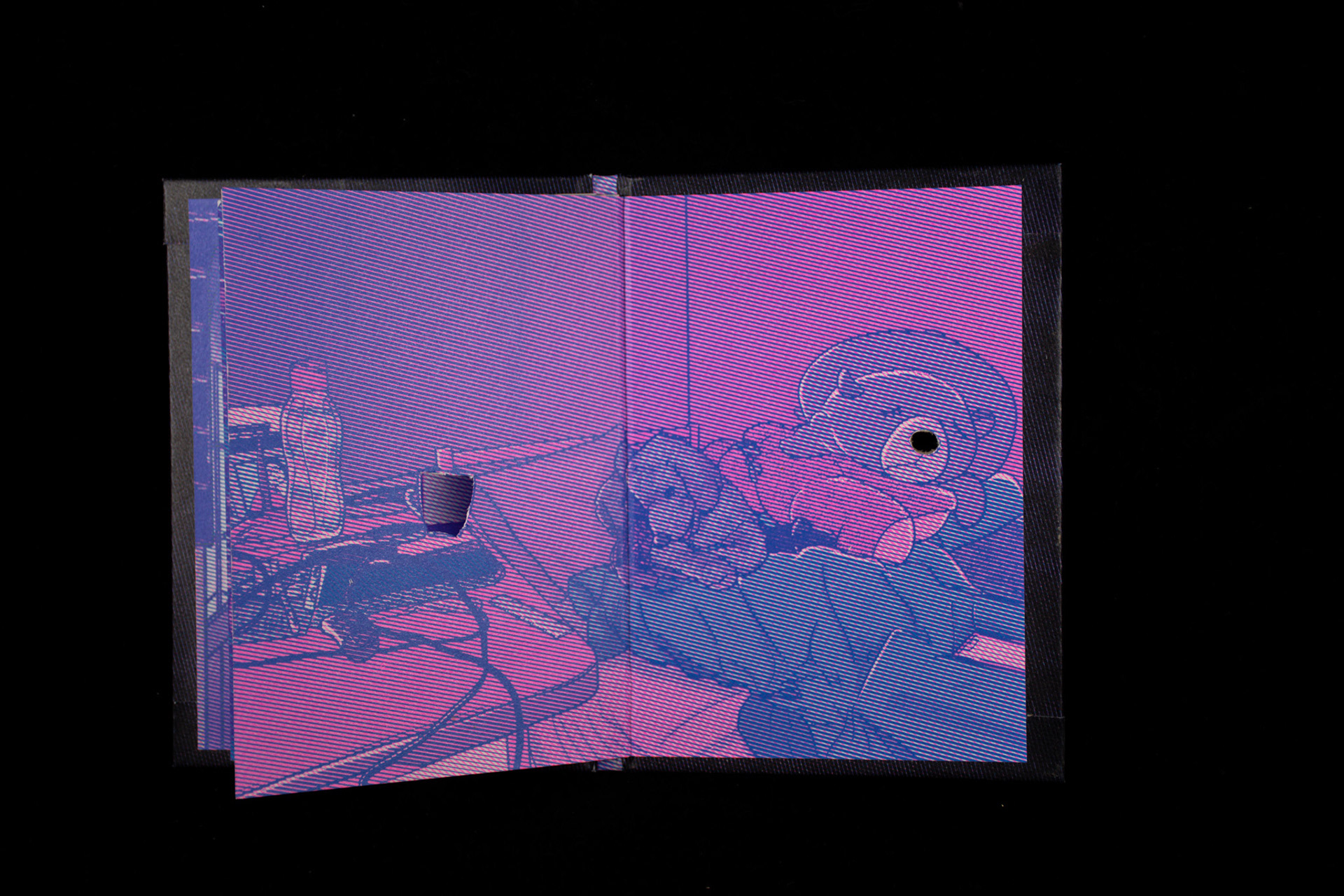
Bedroom
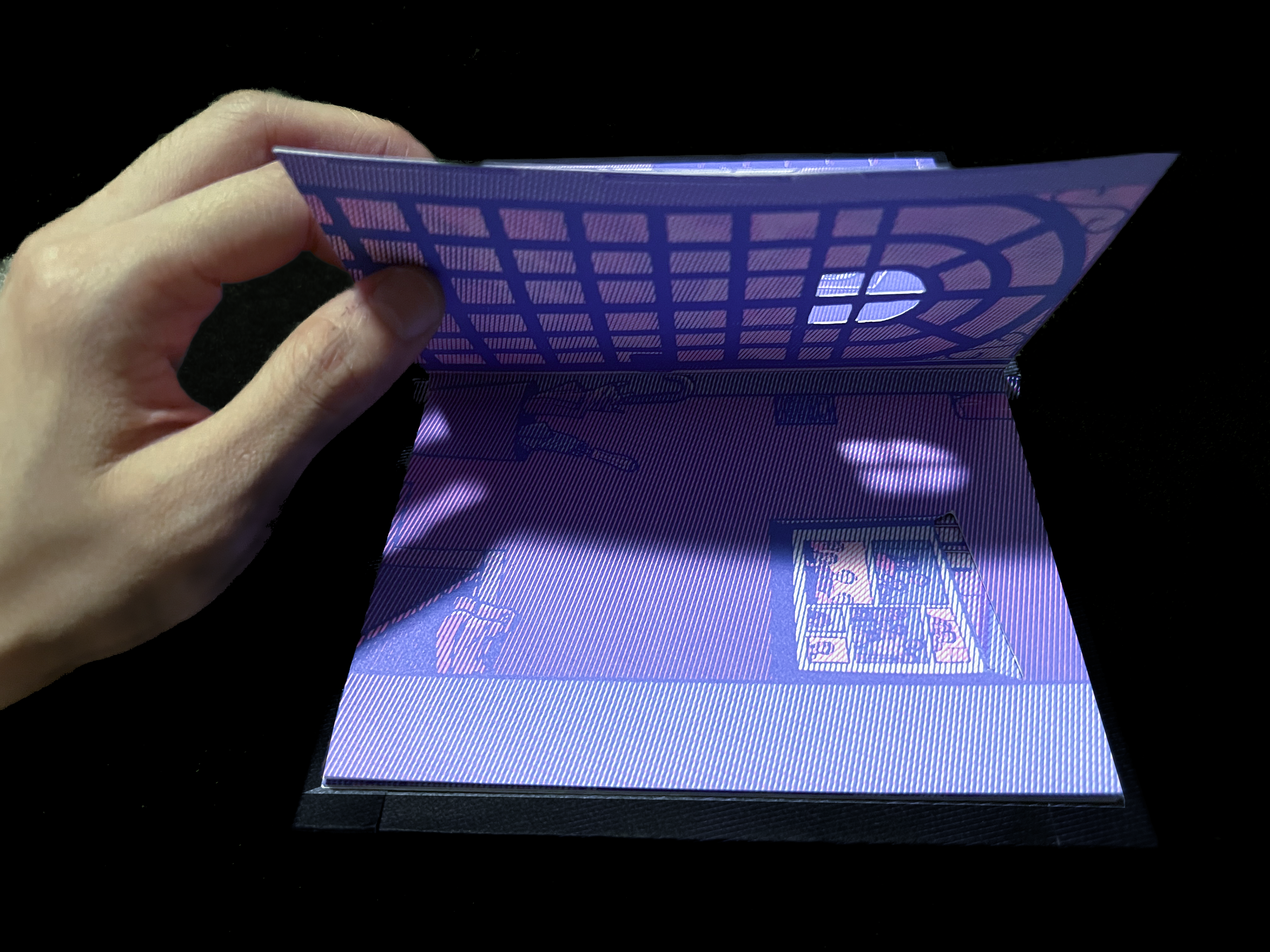
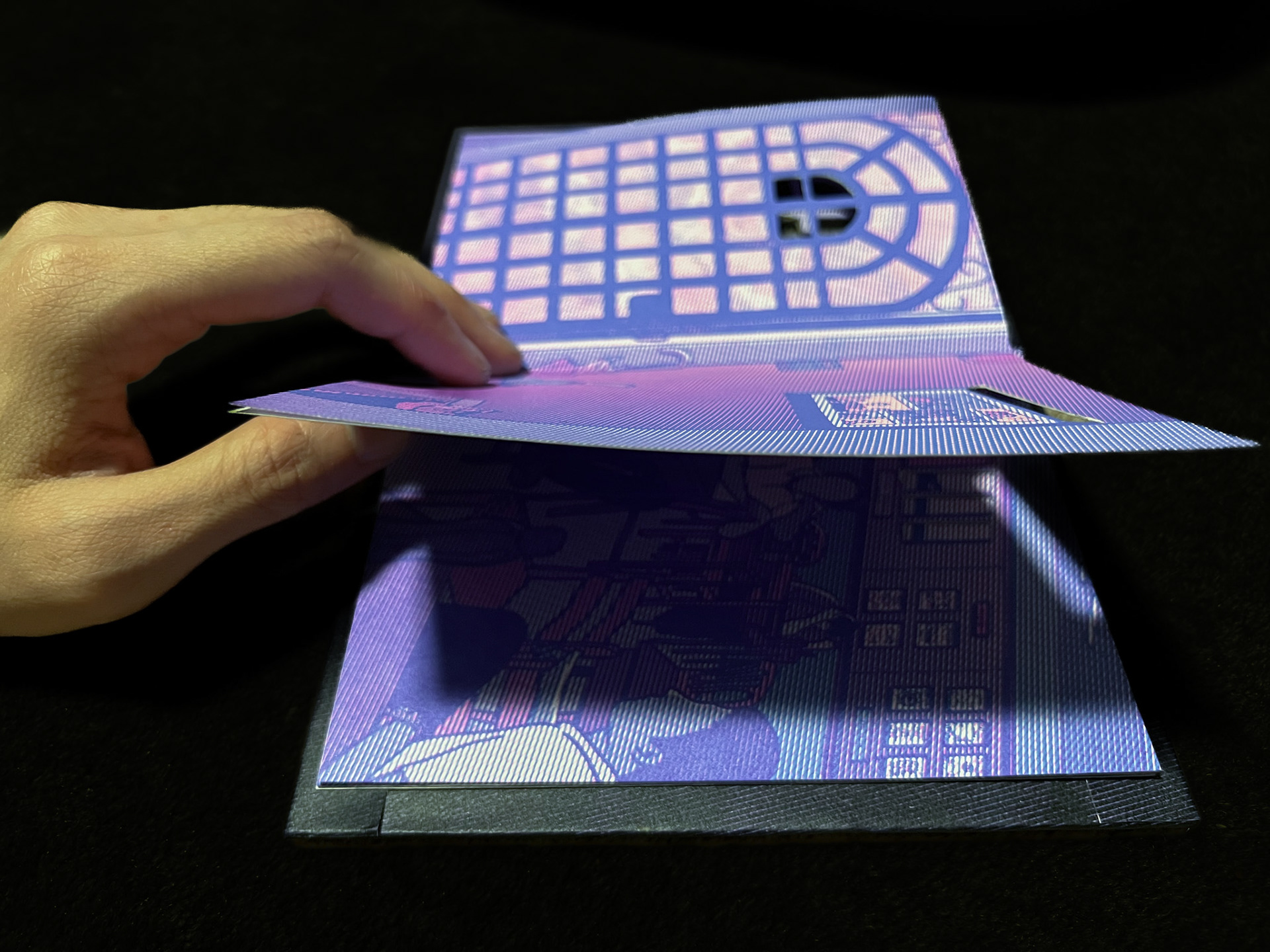
TMDAOS contains cutouts which seamlessly fit into the next scene, visually marrying scenes to represent the cause-and-effect of moments from life. Cloudlike motifs serve as a recurring motif throughout the series and can be seen on each and every page to some capacity.
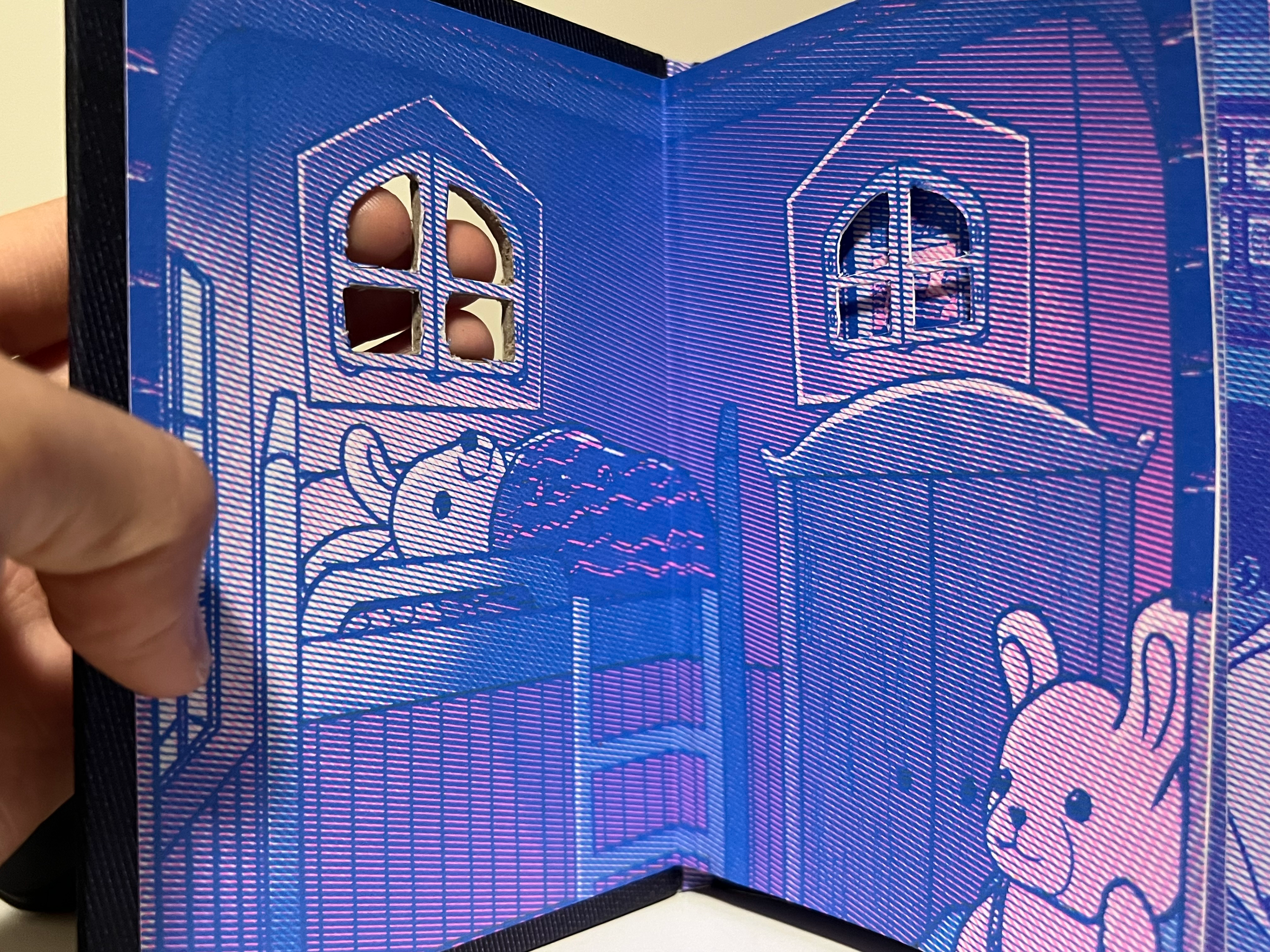
Sylvania details
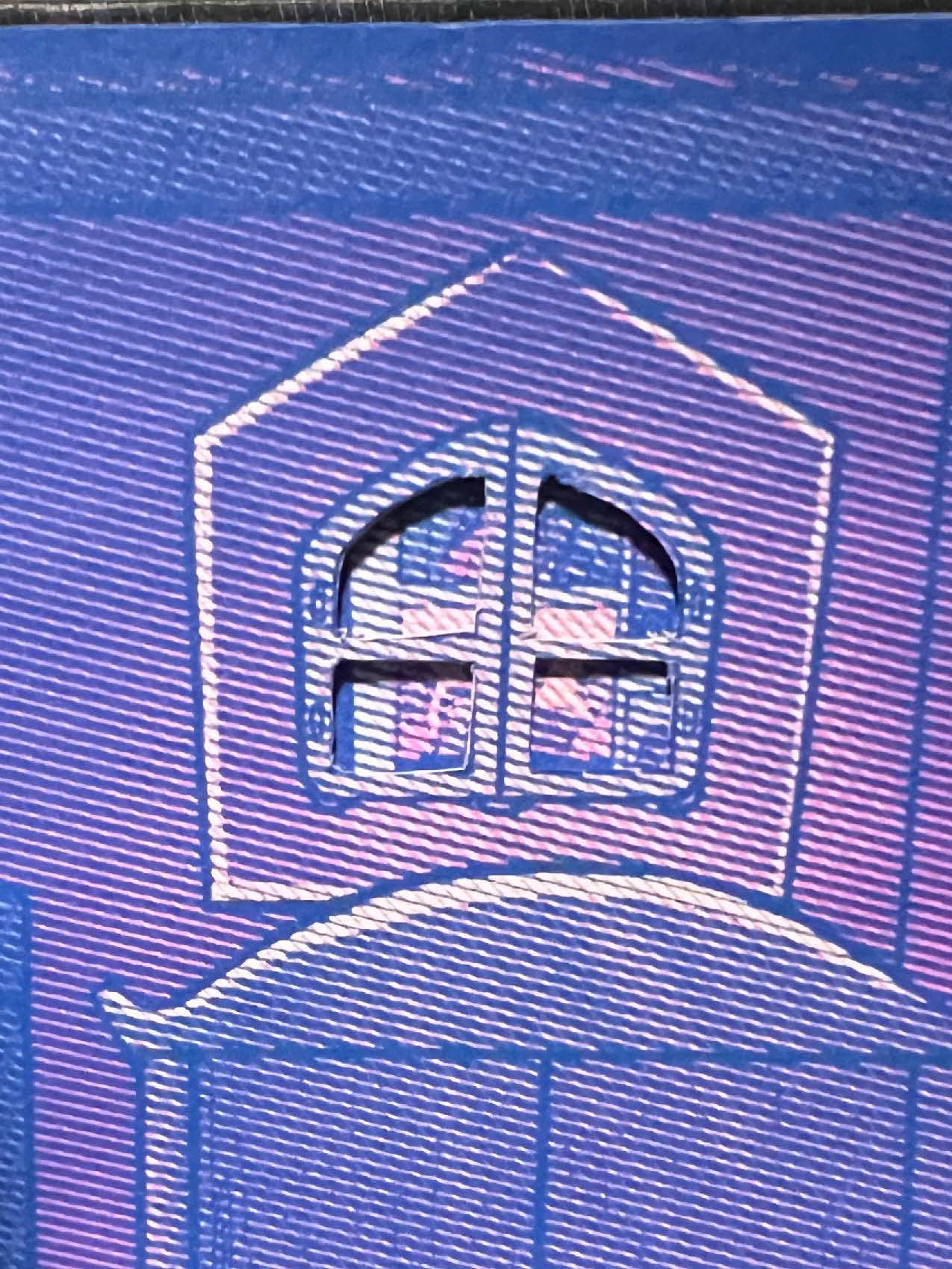
Sylvania details 2
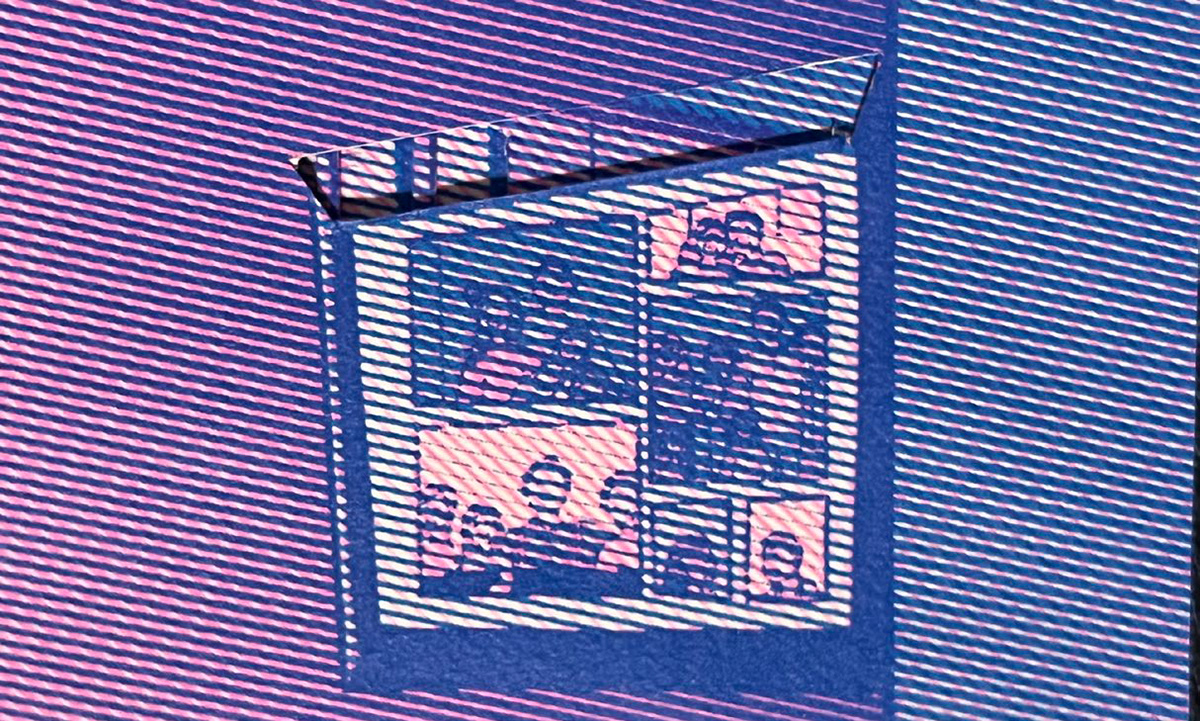
Bandar Country Homes details
Bandar Country Homes details 2
Bandar Country Homes details 3
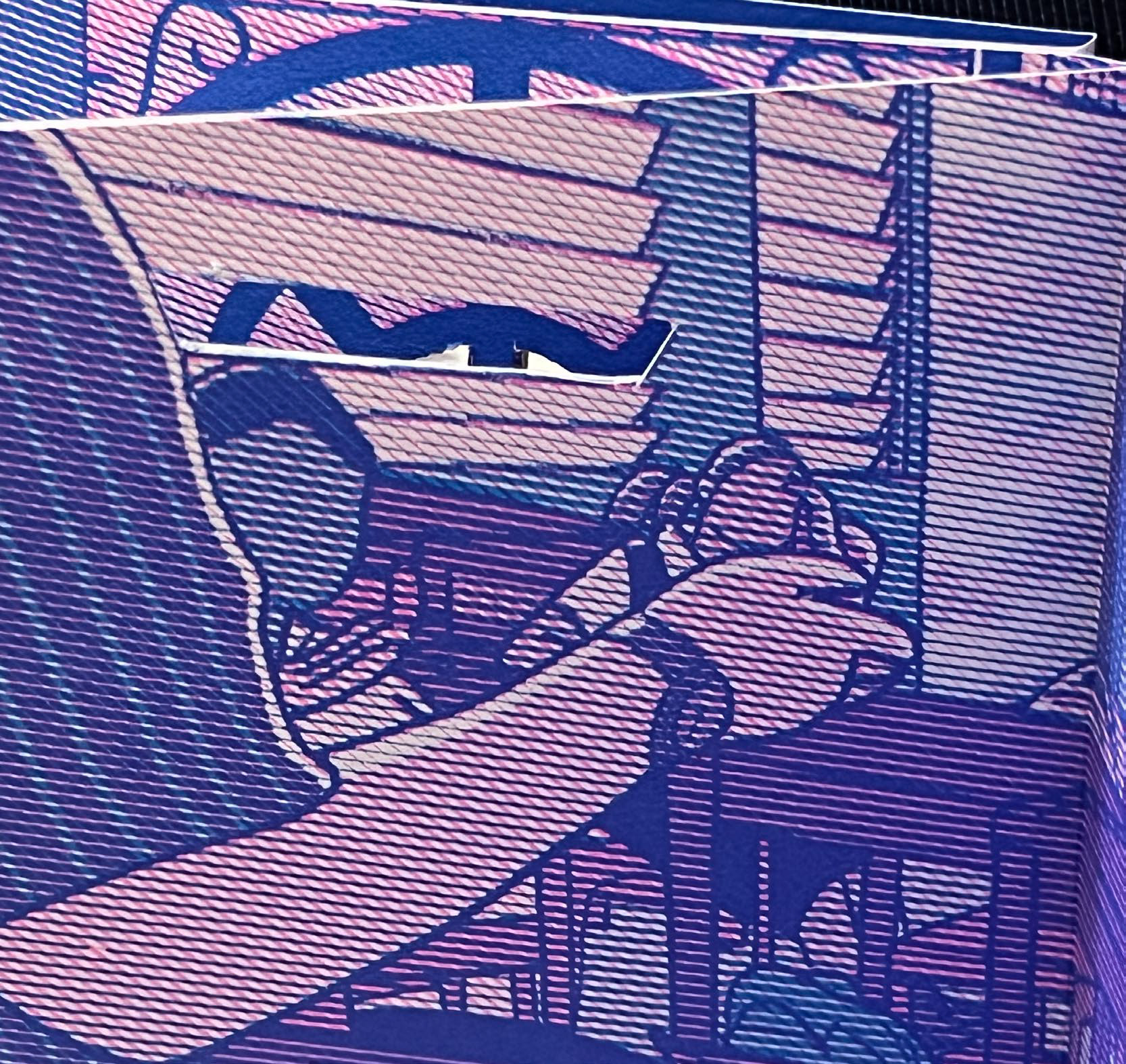
SMK Taman Desa details
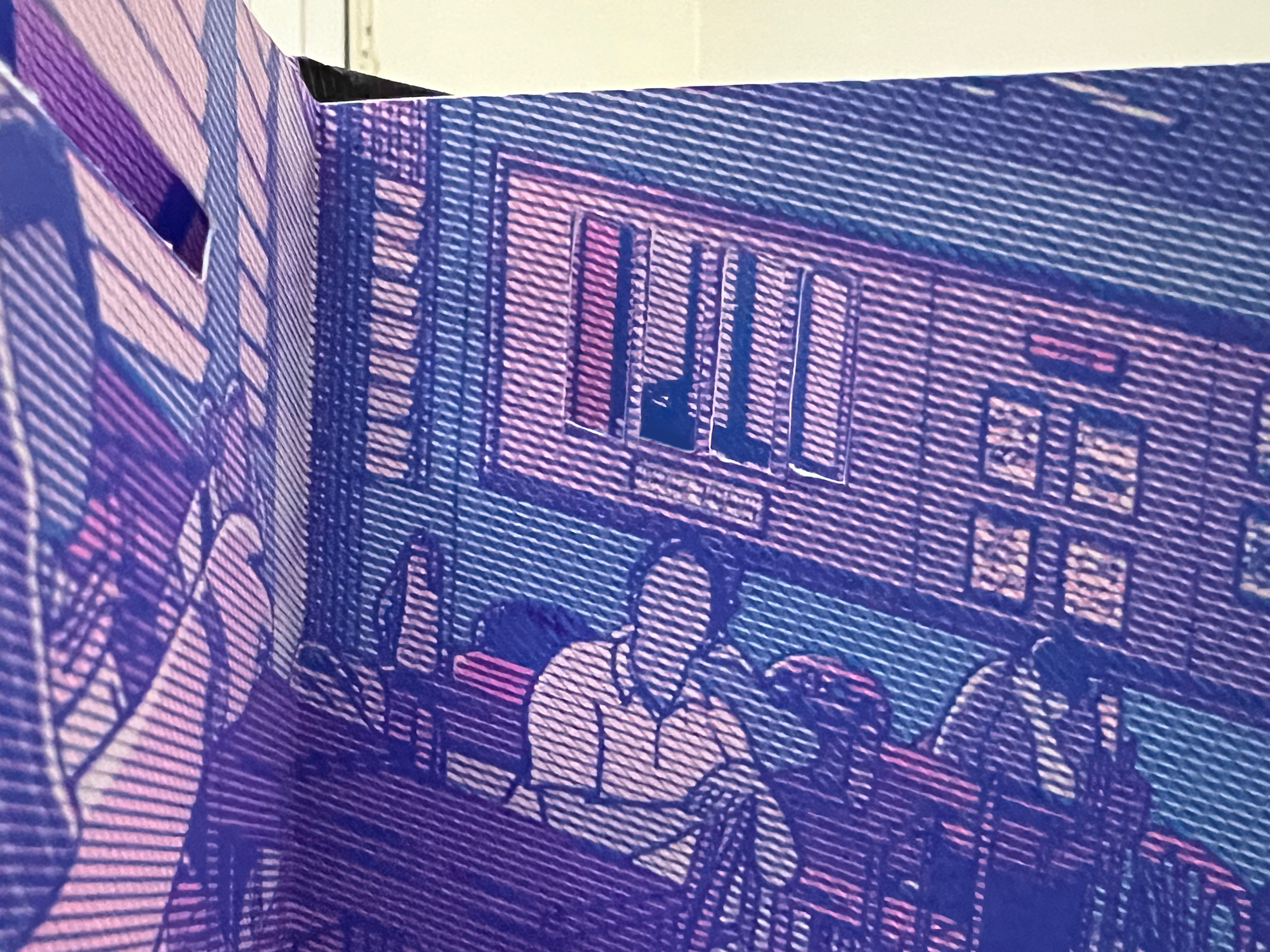
SMK Taman Desa details 2
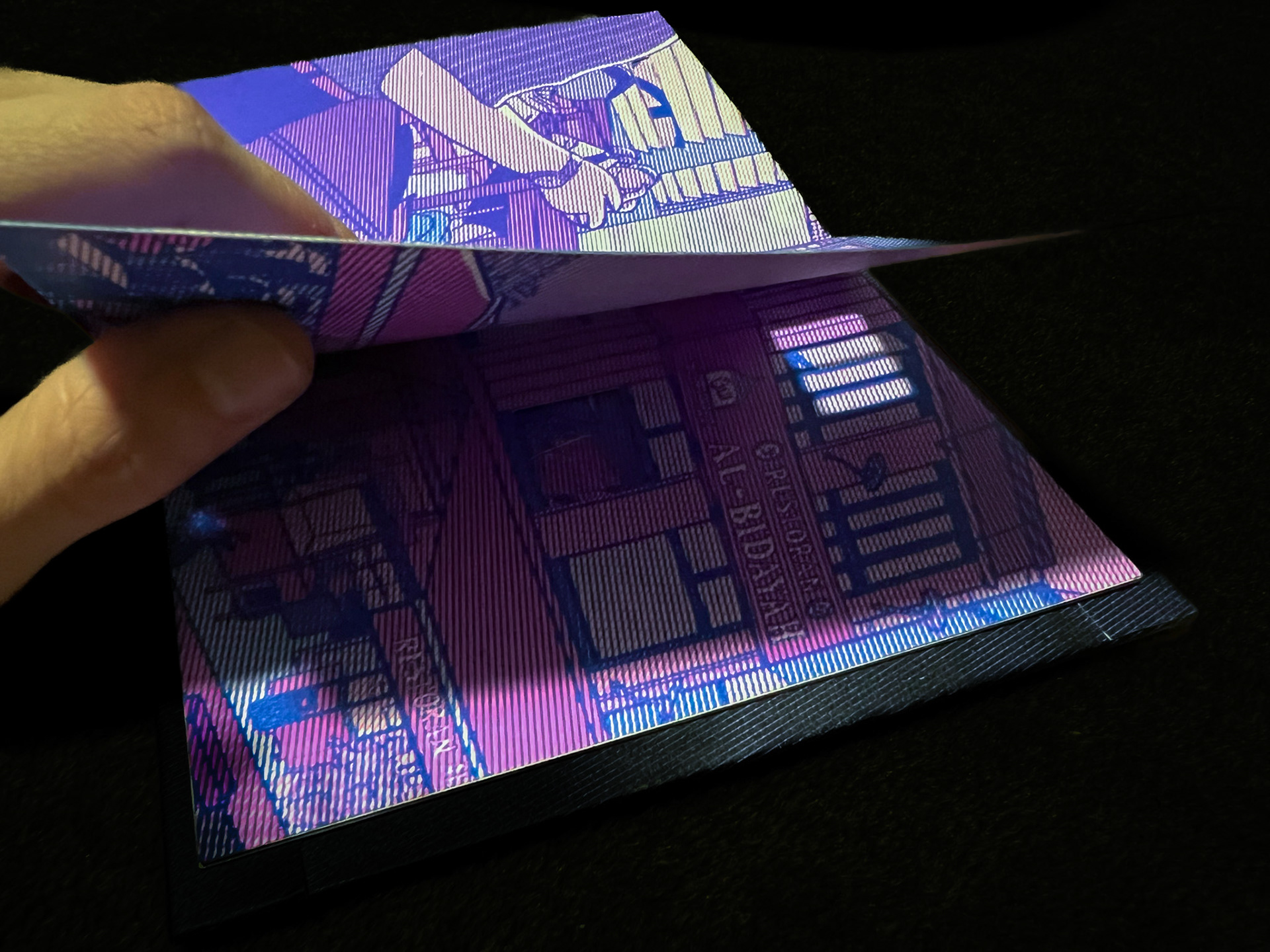
SMK Taman Desa details 3
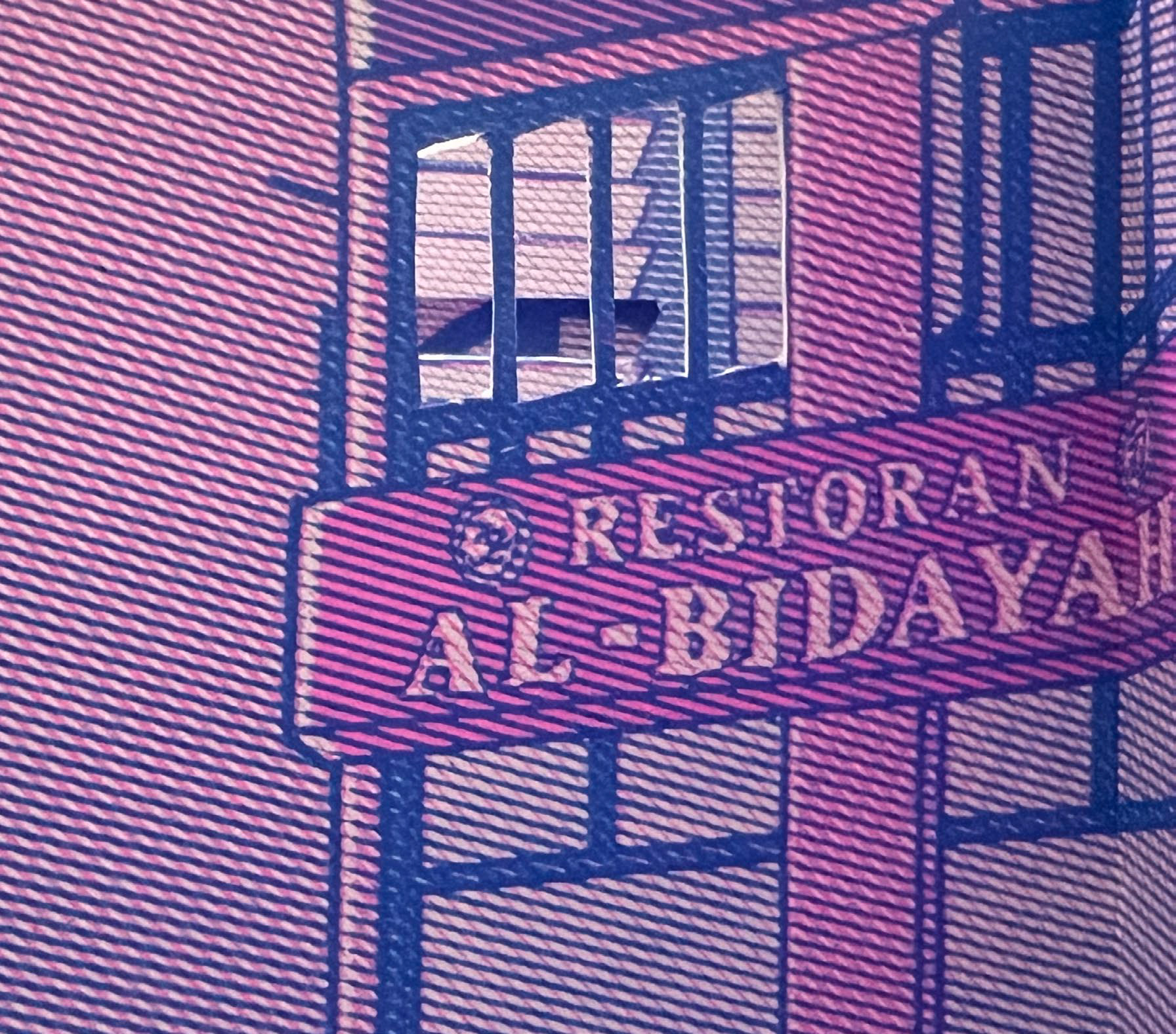
Al-Bidayah details
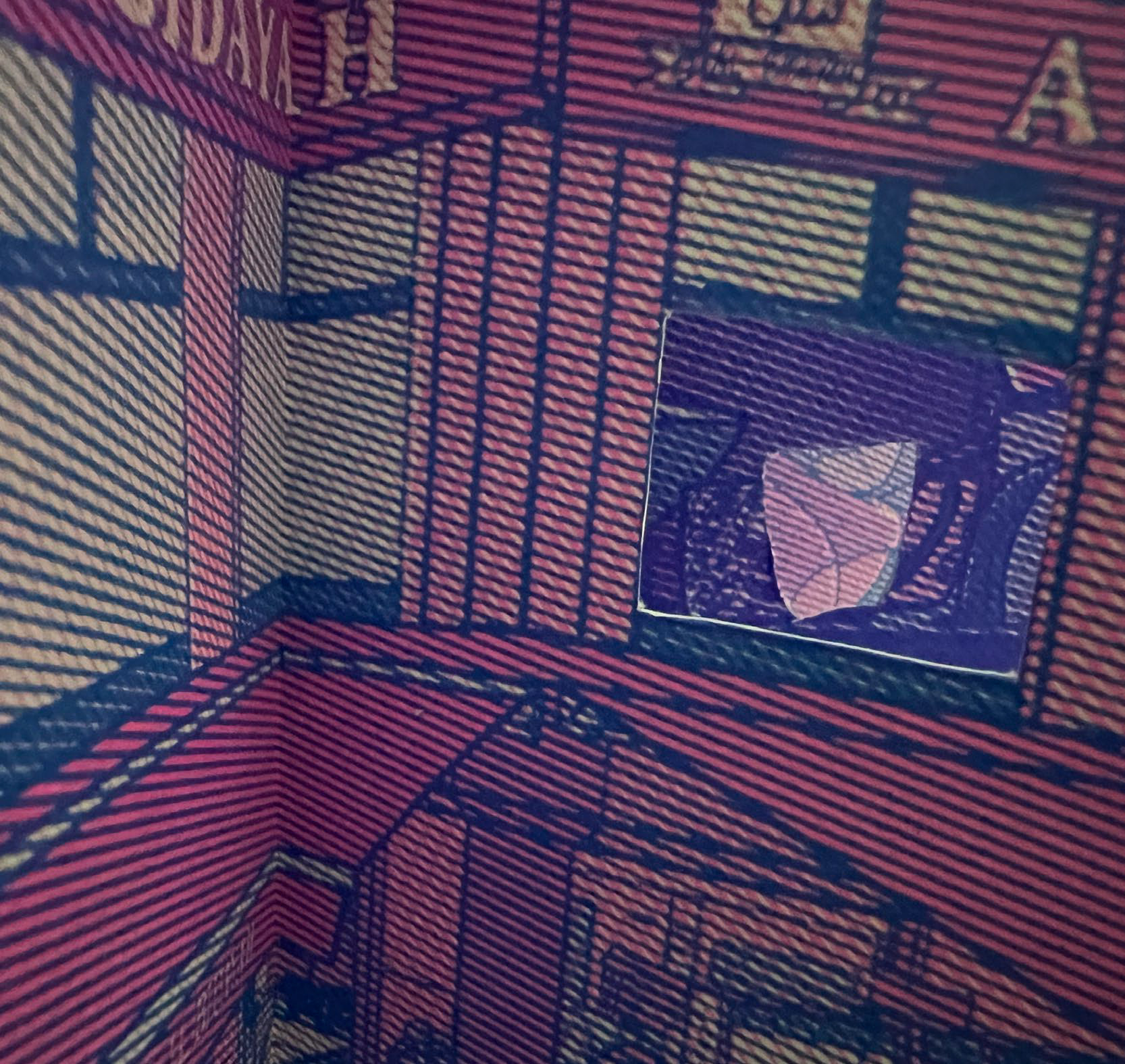
Al-Bidayah details 2
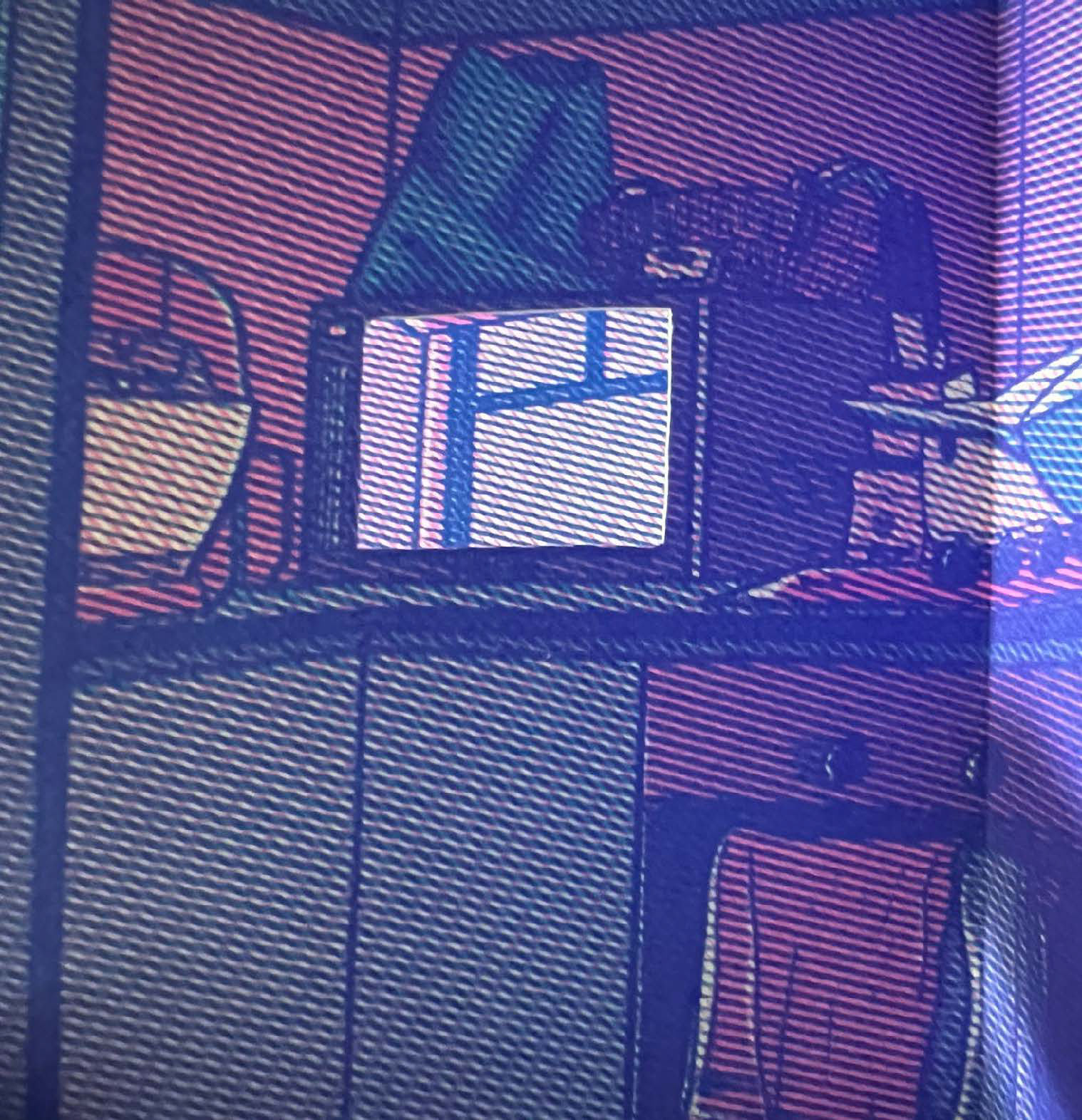
Kitchen details
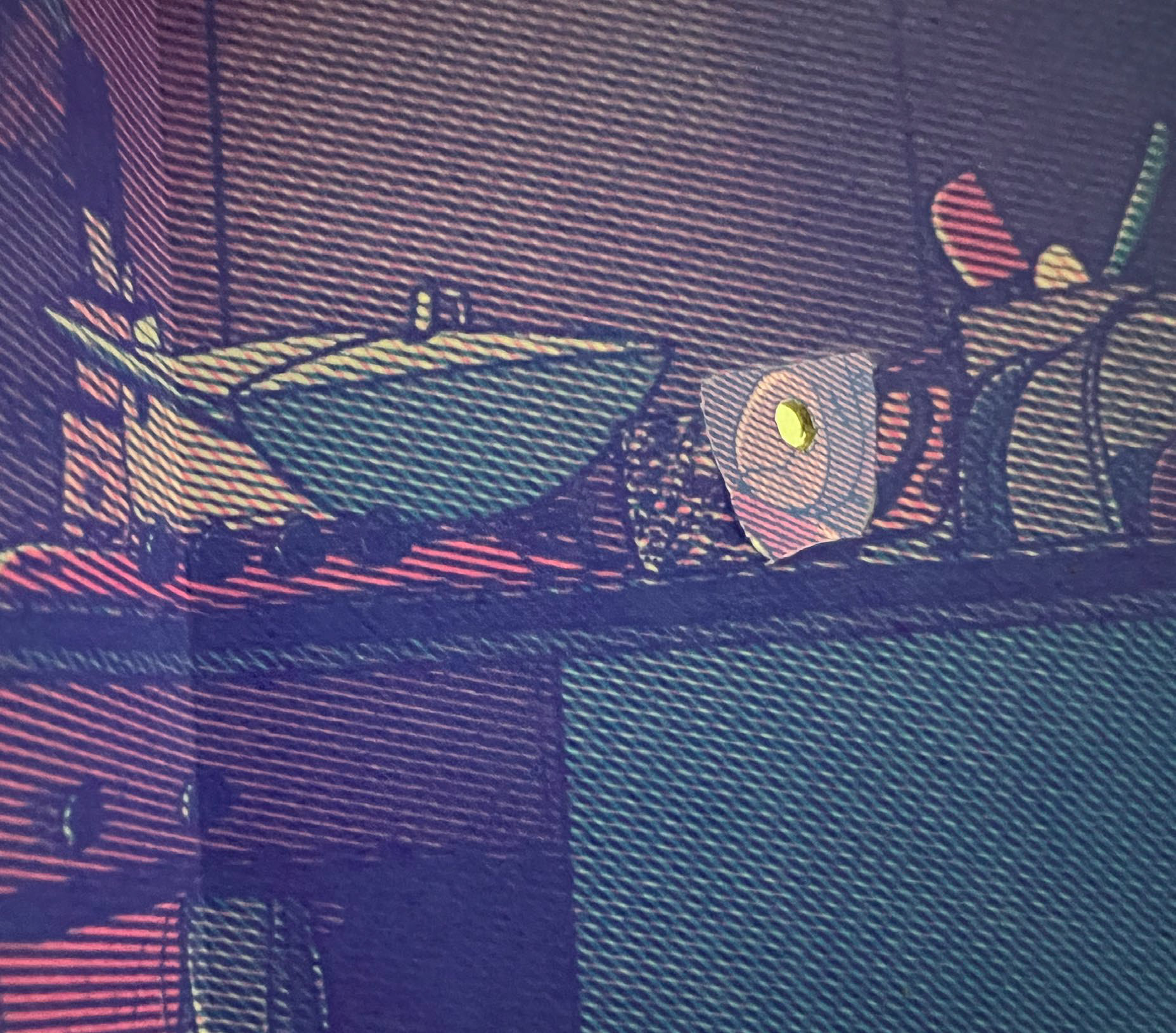
Kitchen details 2
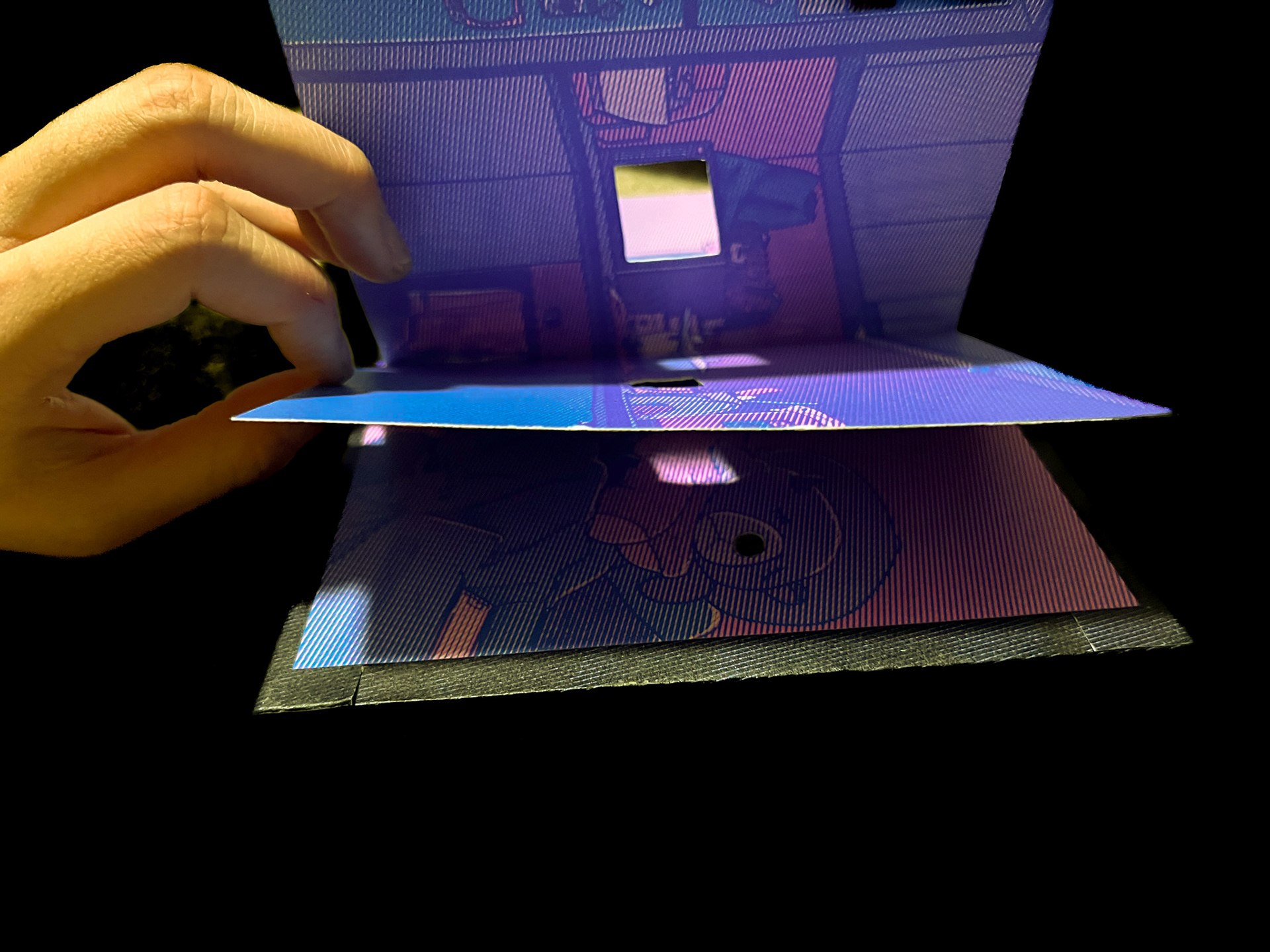
Kitchen details 3
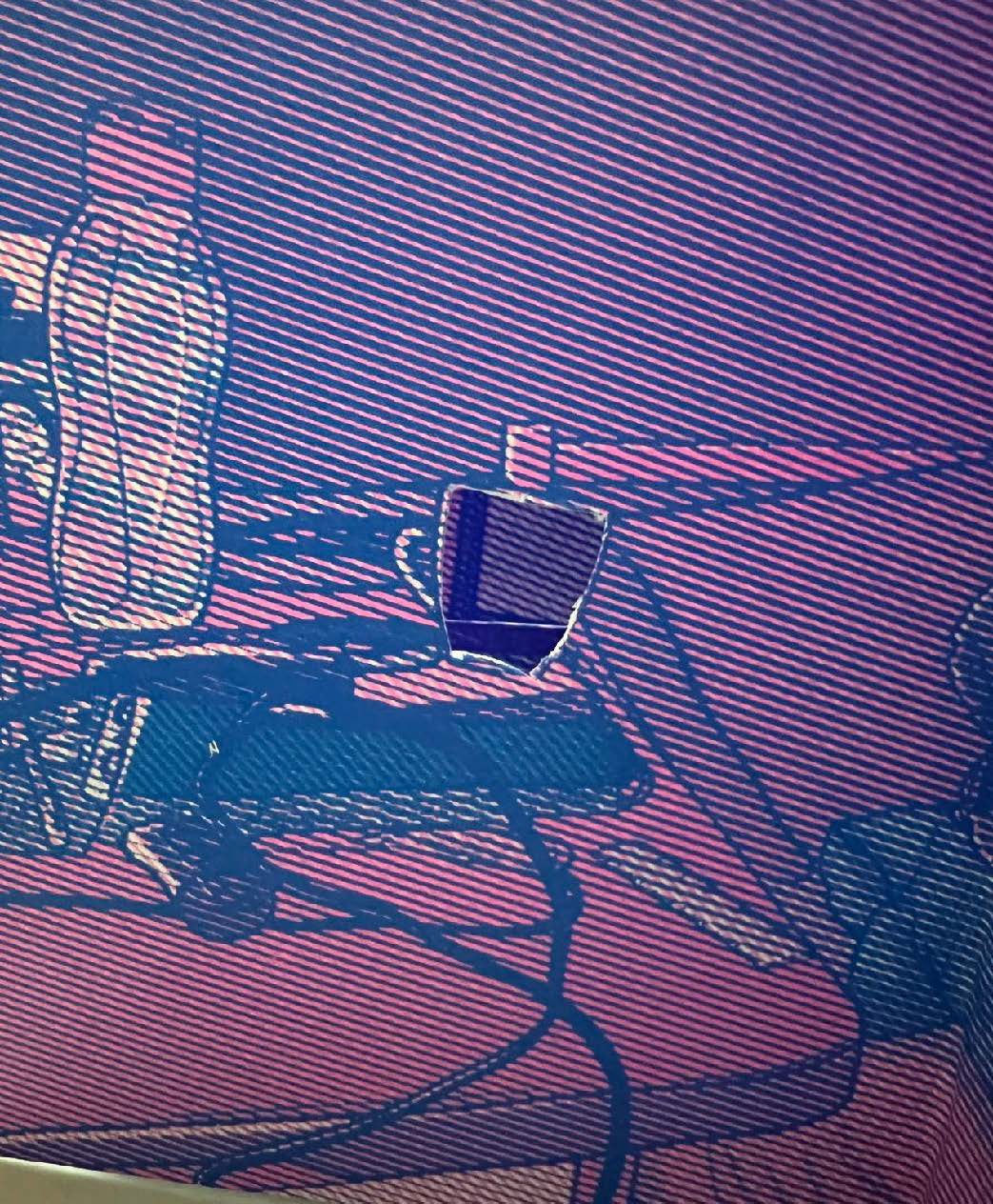
Bedroom details
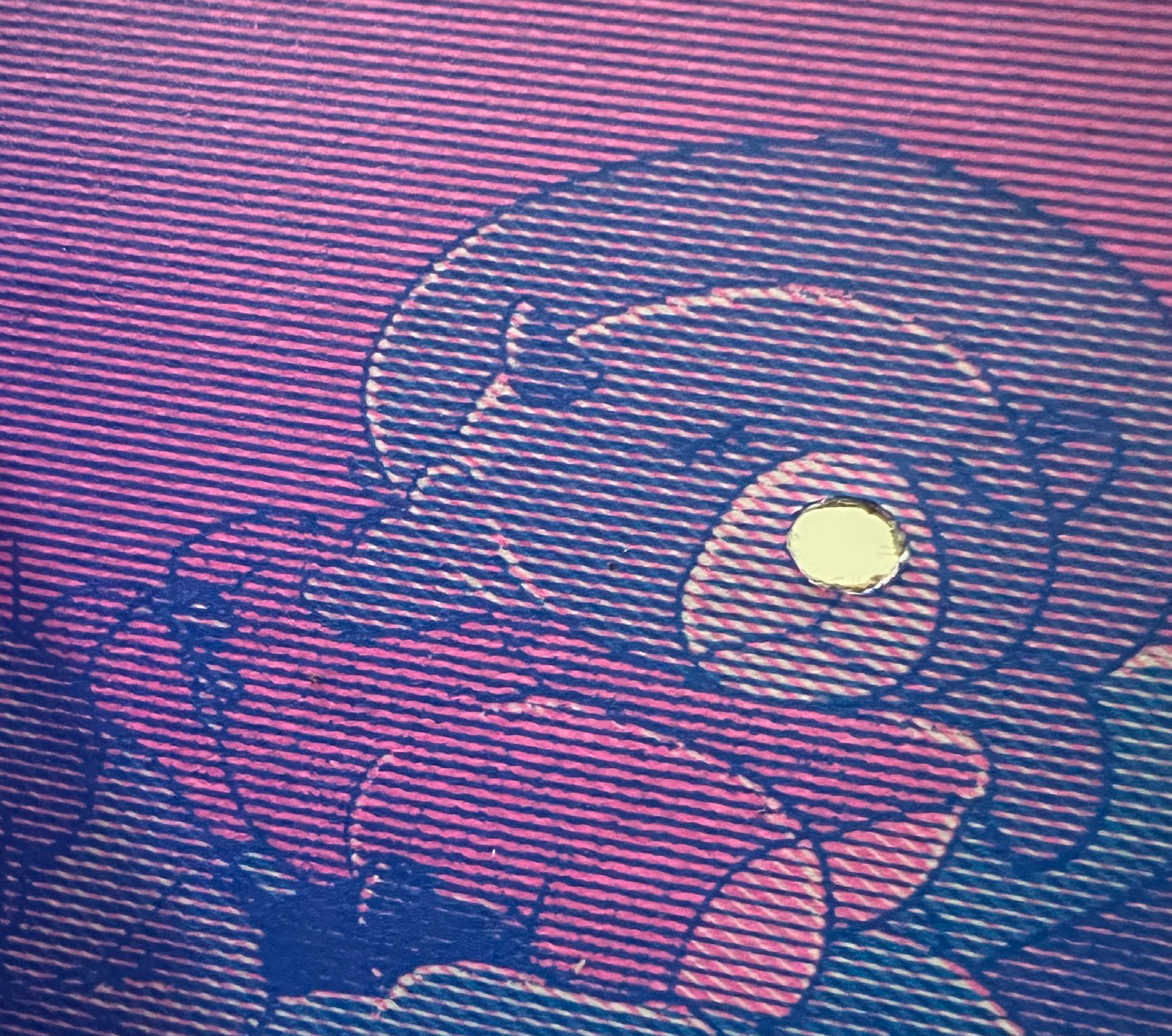
Bedroom details 2
Narratively, TMDAOS can be read front-to-back and back-to-front: from front-to-back, it takes the reader through a journey down memory line until the character wakes from their slumber; from back-to-front, the character struggles to fall asleep and contemplates the what-ifs as they revisit moments from their past before finally nodding off ( alluded to by the clock).
TMDAOS was an extremely creatively fulfilling project, though time constraints led to some weaker areas I feel could use more finesse, such as the crafting of the book and the cleanness of cutouts from the front and back covers. If I had more time, I would have also pushed the project further by playing with relief printing to create a solander box as the book cover, which would've been derived from Enid Blyton book covers.
PROCESS
Below are the digitally-drawn pieces, done on Photoshop:
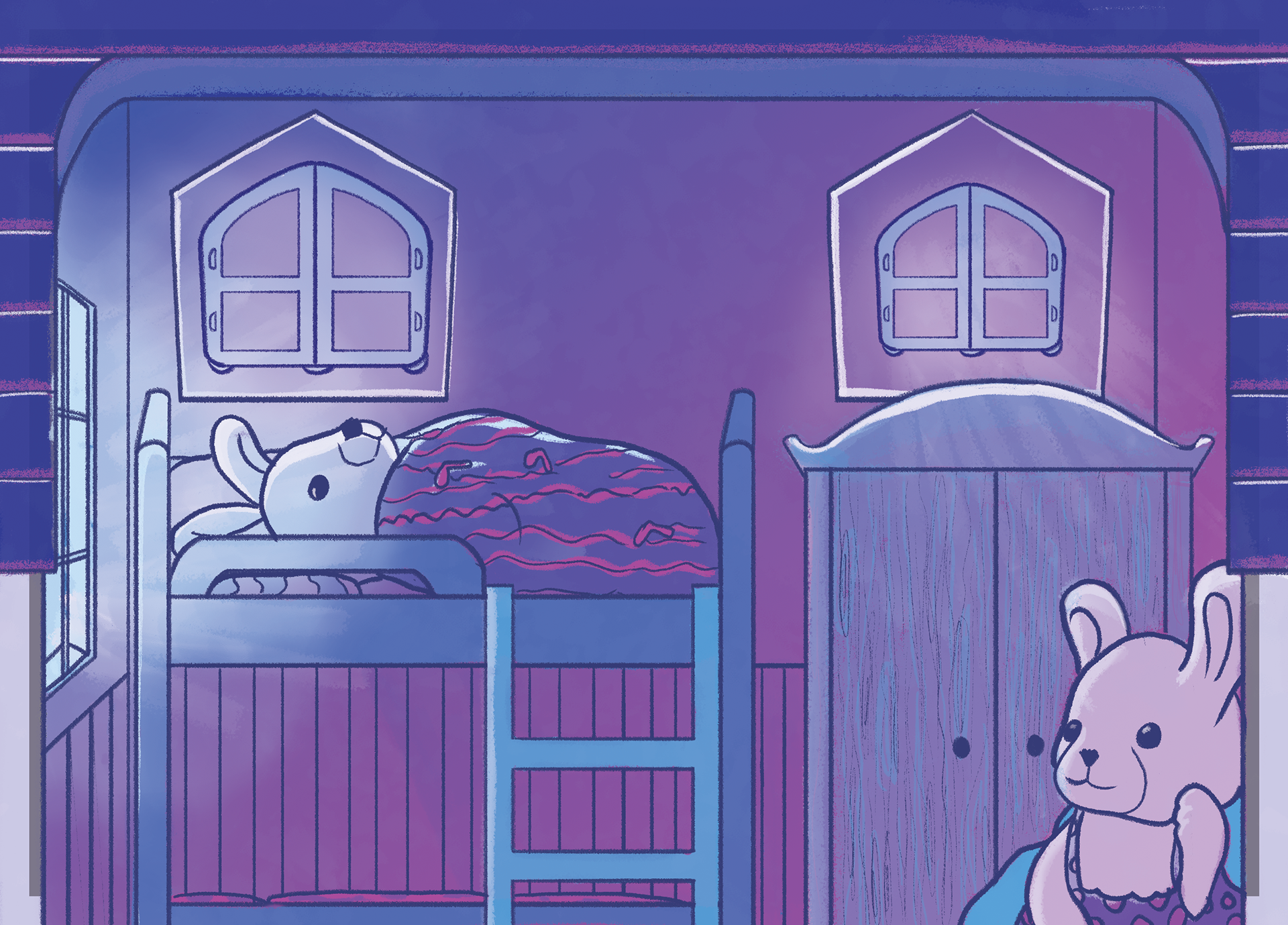
Digital Drawing- Sylvania
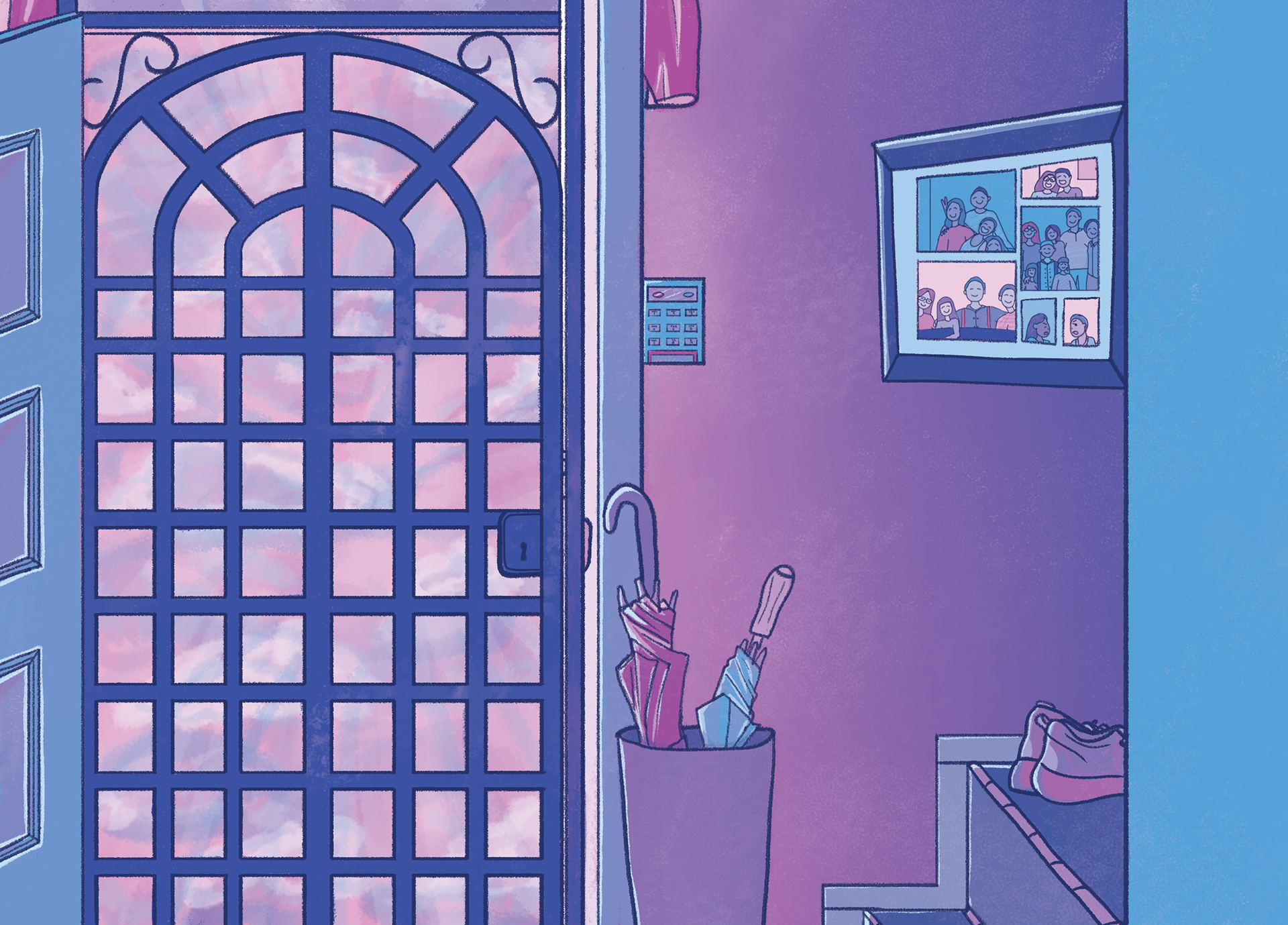
Digital Drawing- Bandar Country Homes
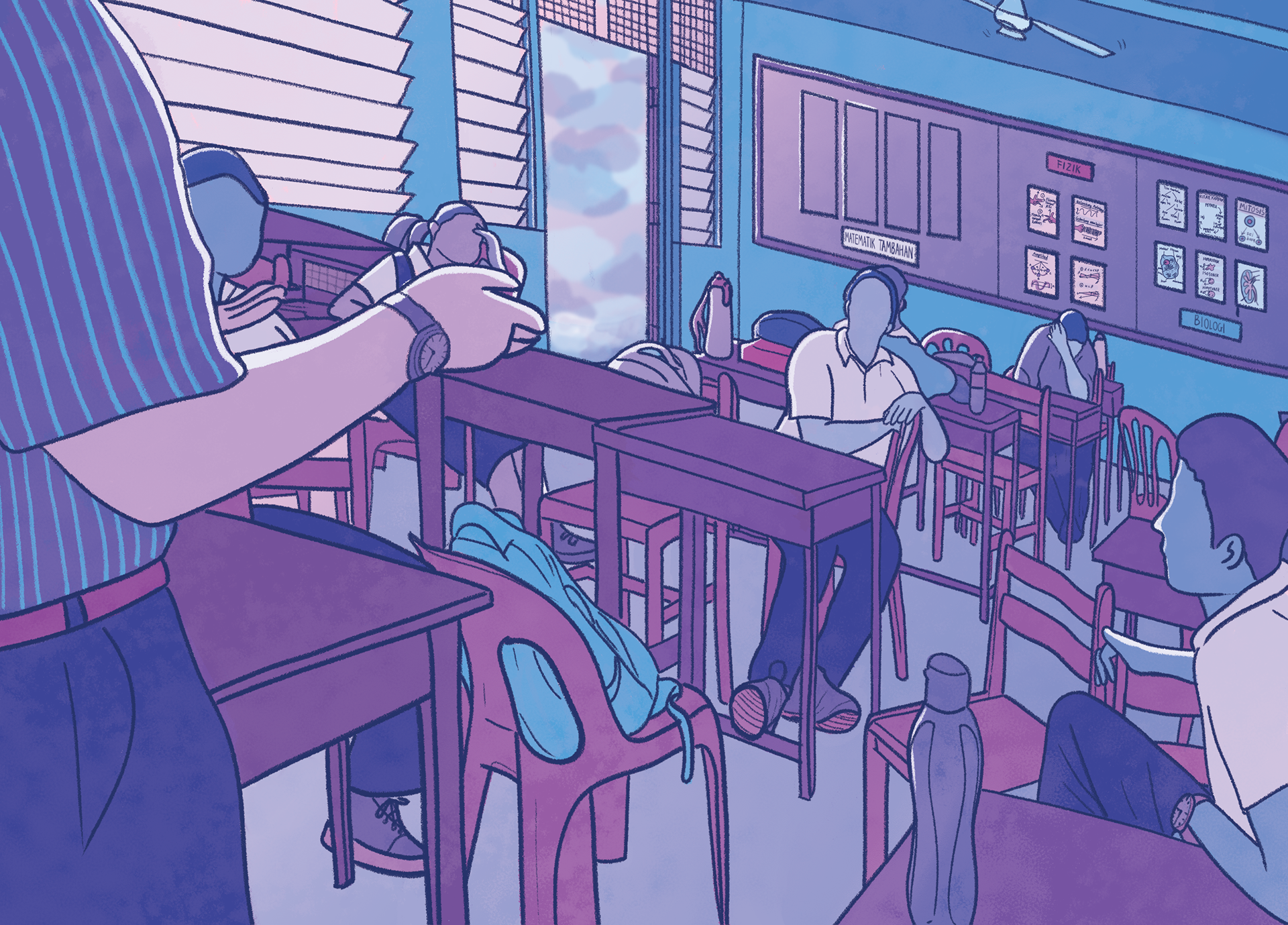
Digital Drawing- SMK Taman Desa
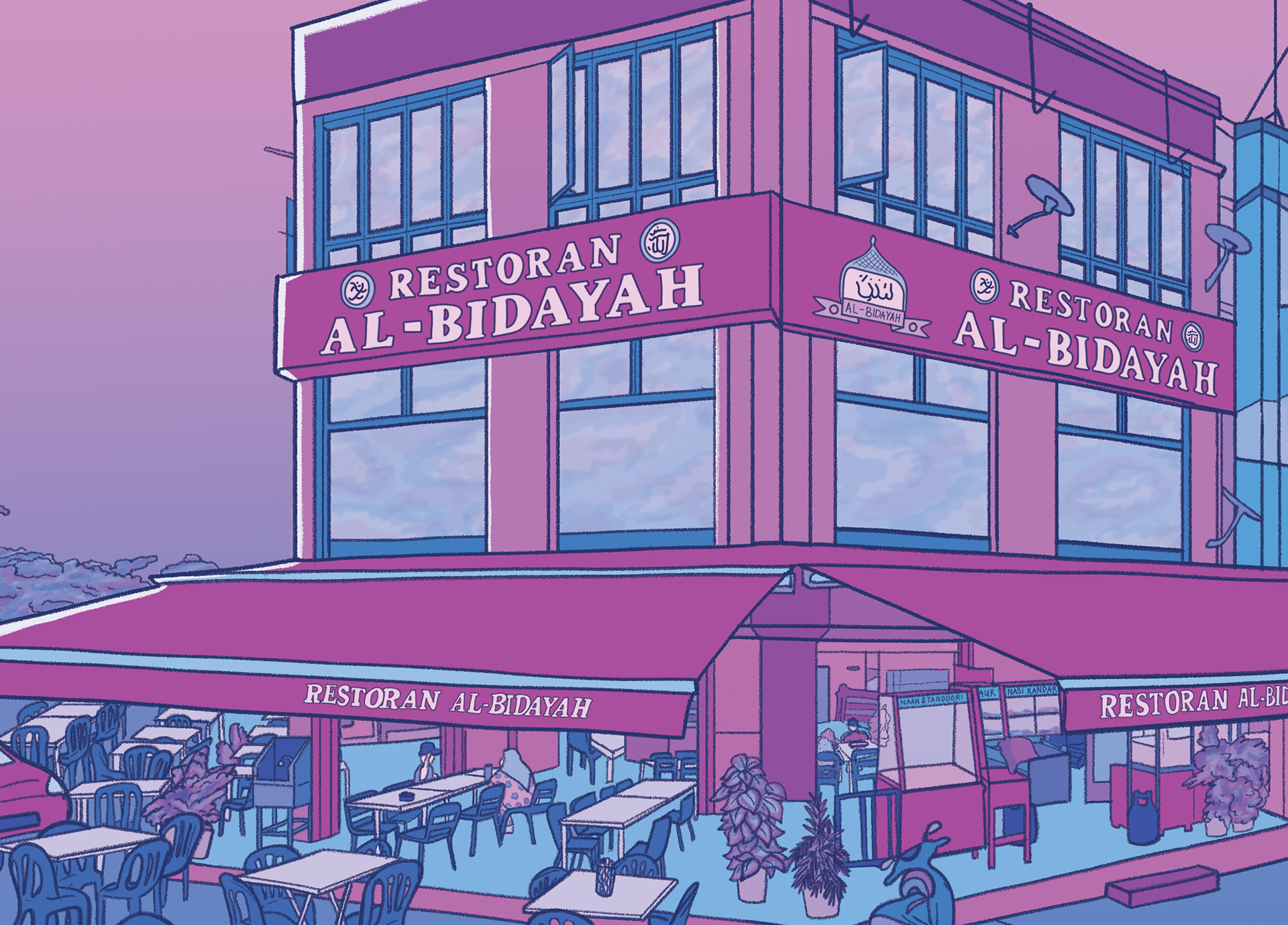
Digital Drawing- Al-Bidayah
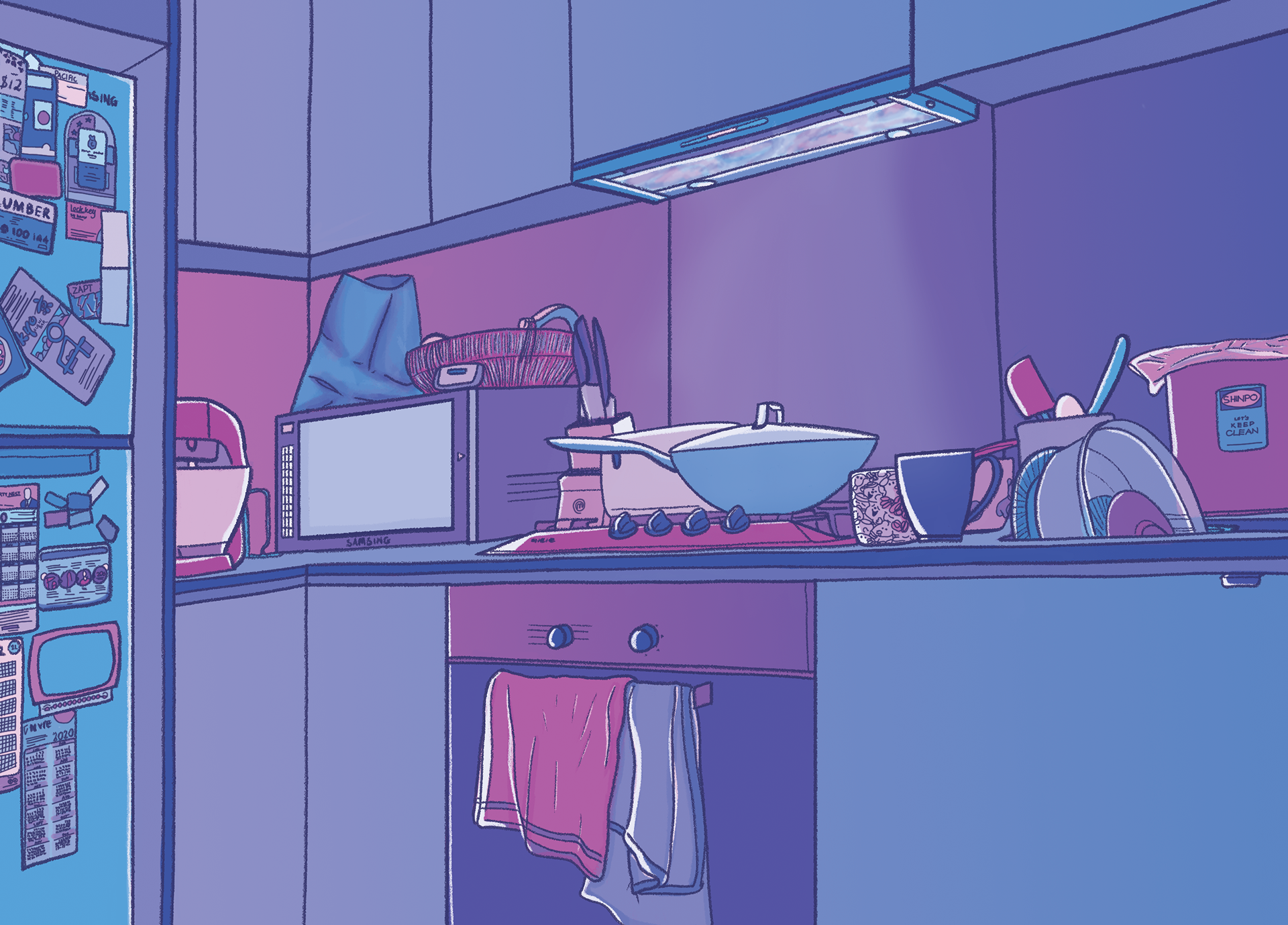
Digital Drawing- Kitchen
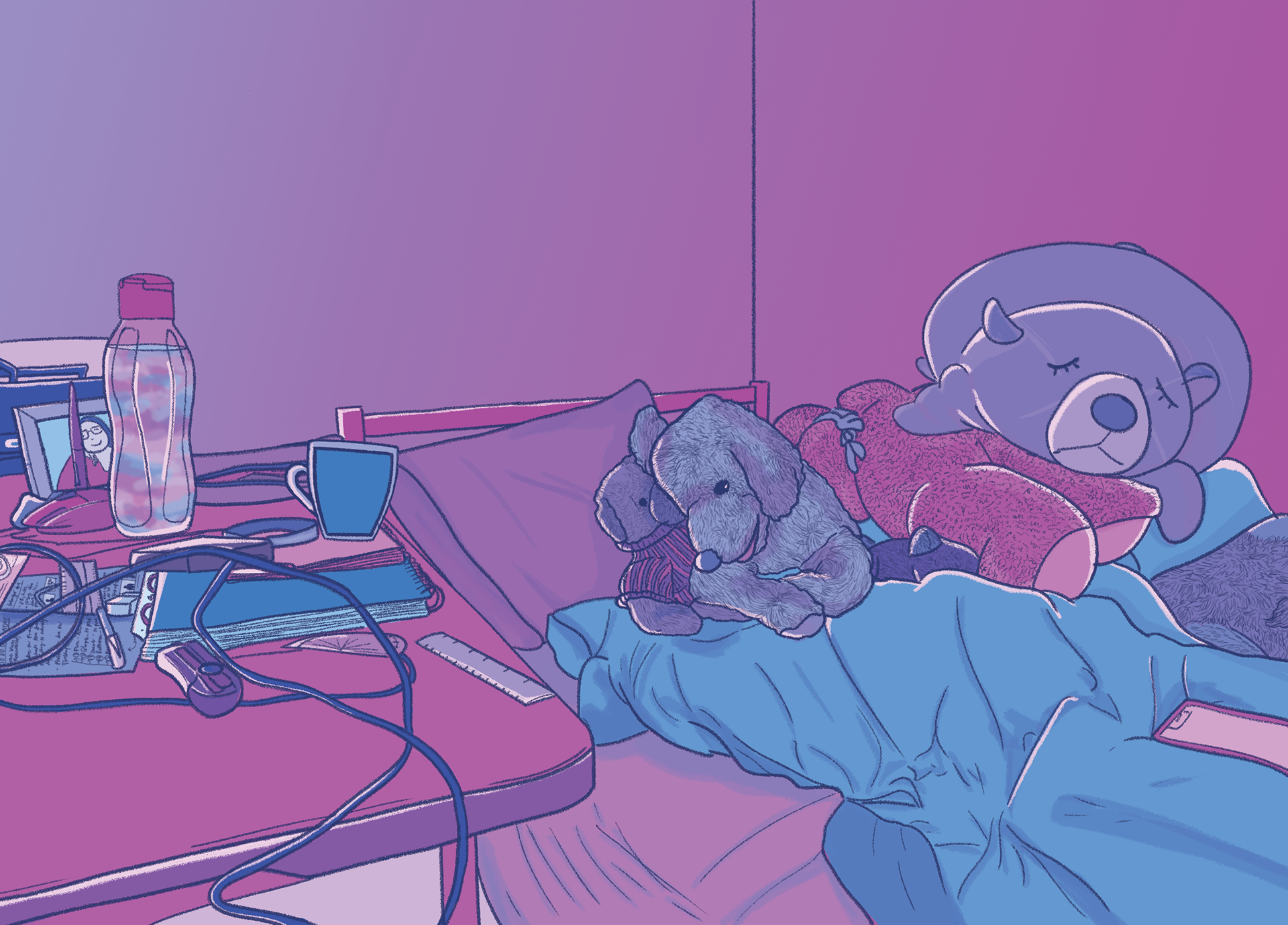
Digital Drawing- Bedroom
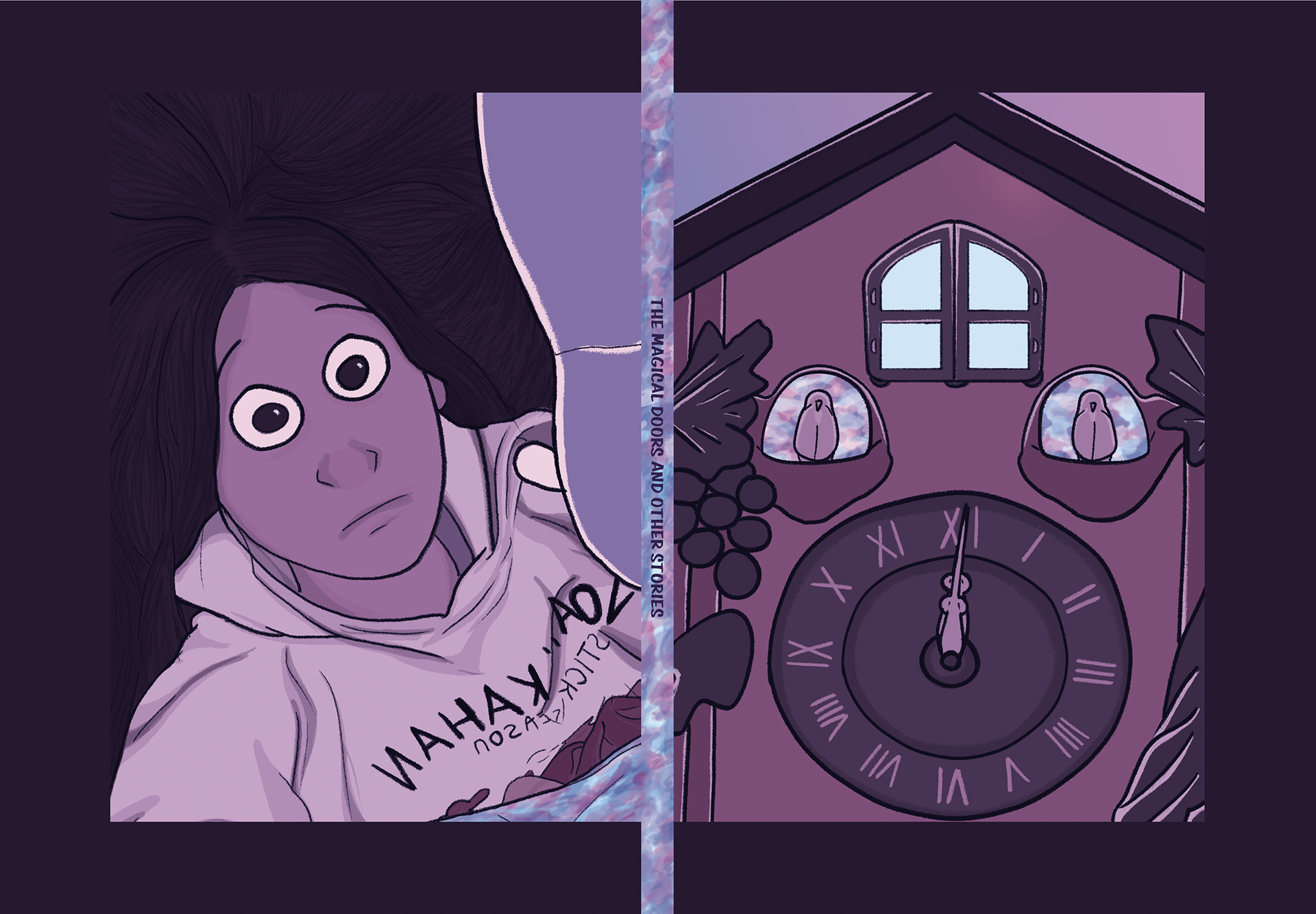
Digital Drawing- Cover
Note the micro-details I hyperfixated on which I did not even show up on the final screenprinted result....
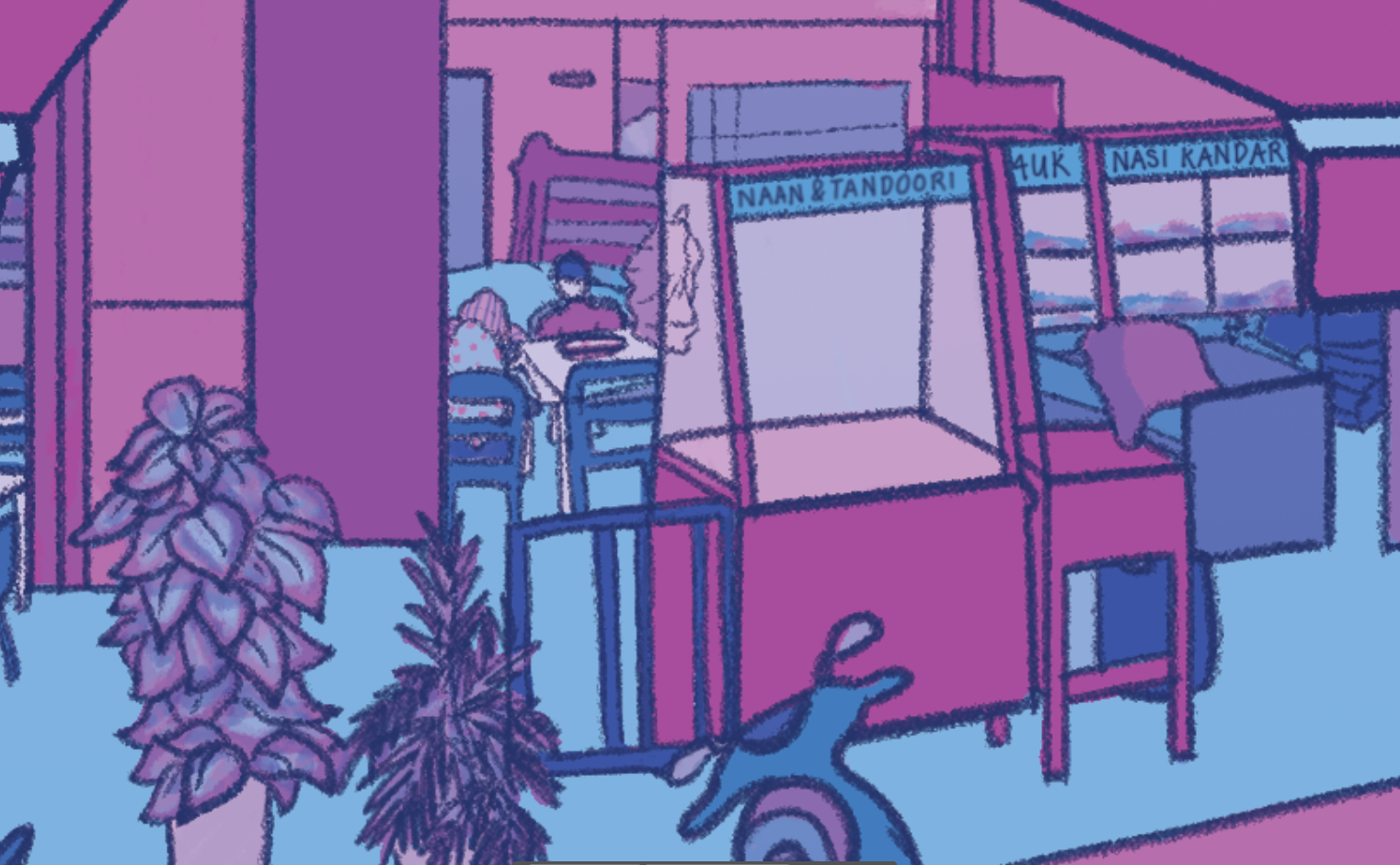
Digital closeup of Al-Bidayah
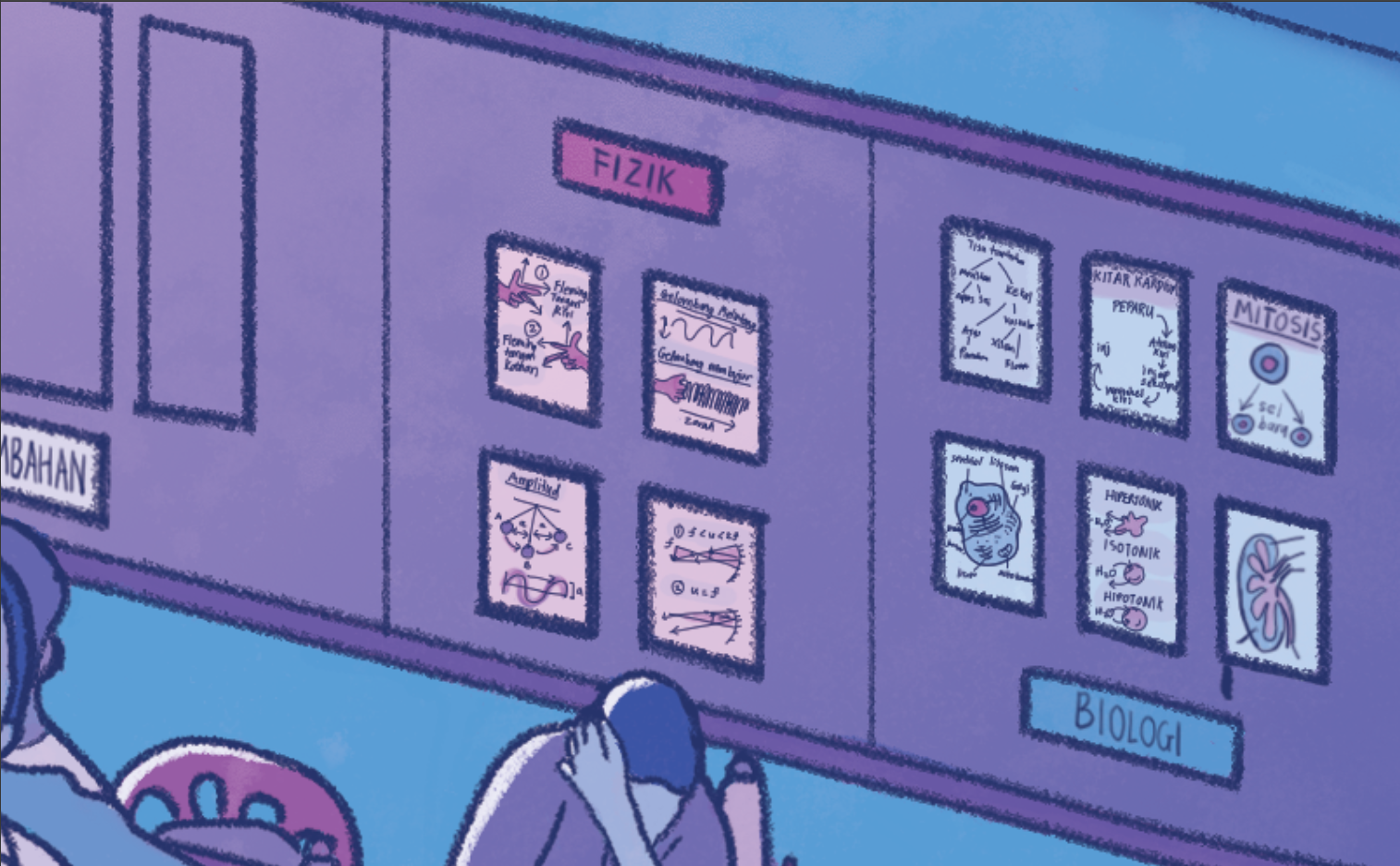
Digital closeup of SMK Taman Desa
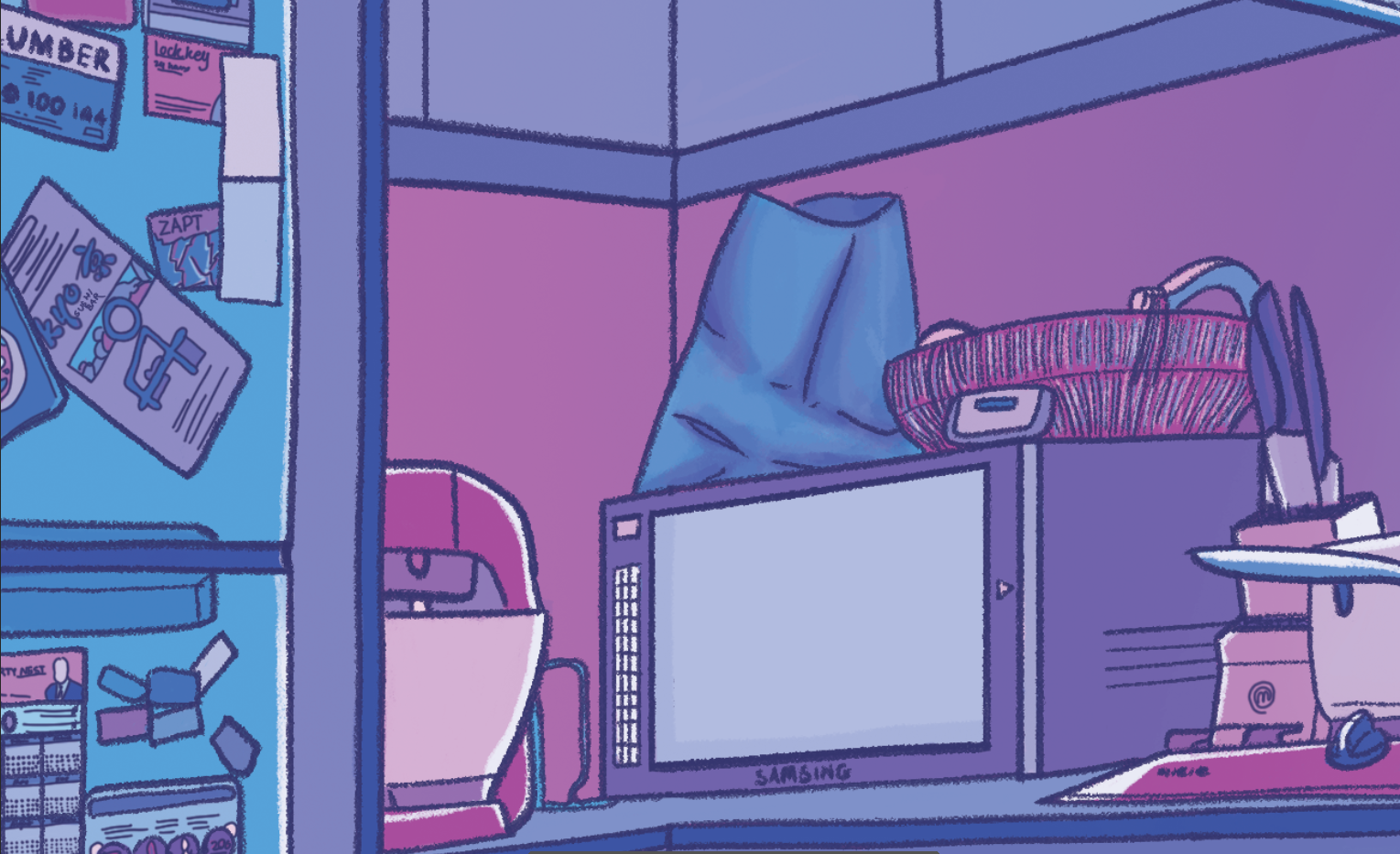
Digital closeup of Kitchen
Sample of created line bitmaps, separated into channels and finished with registration marks:
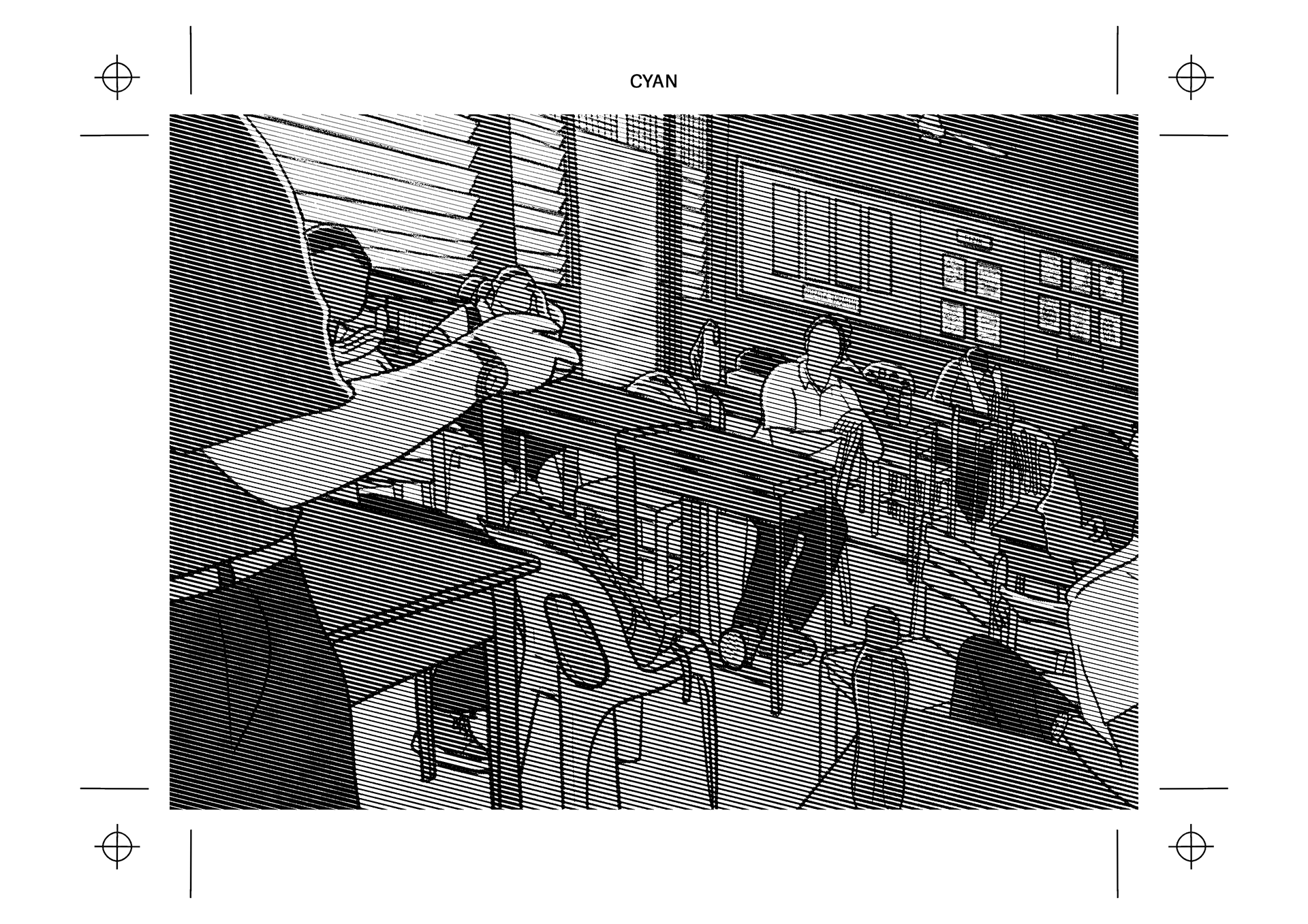
Classroom: Cyan bitmap
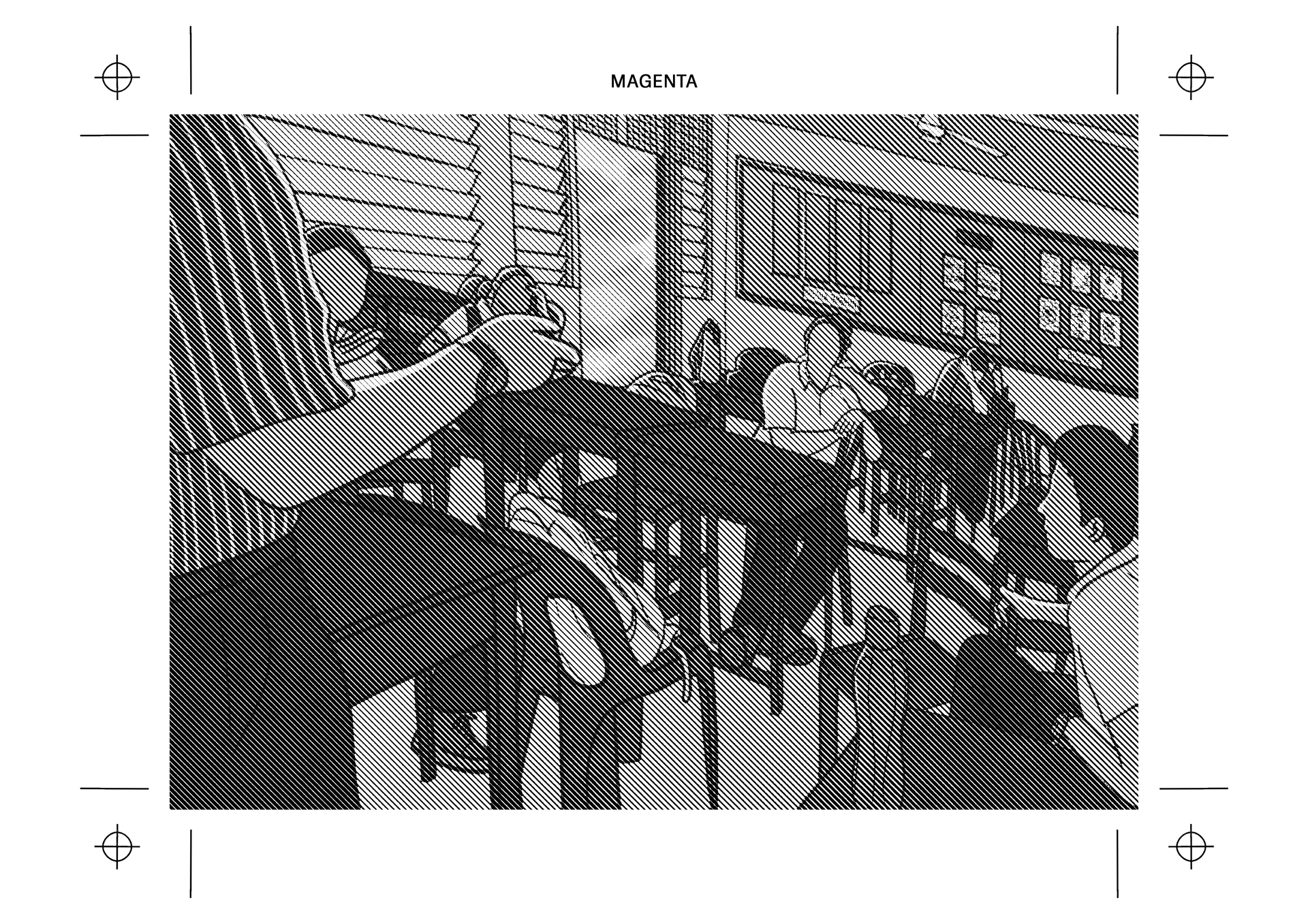
Classroom: Magenta bitmap
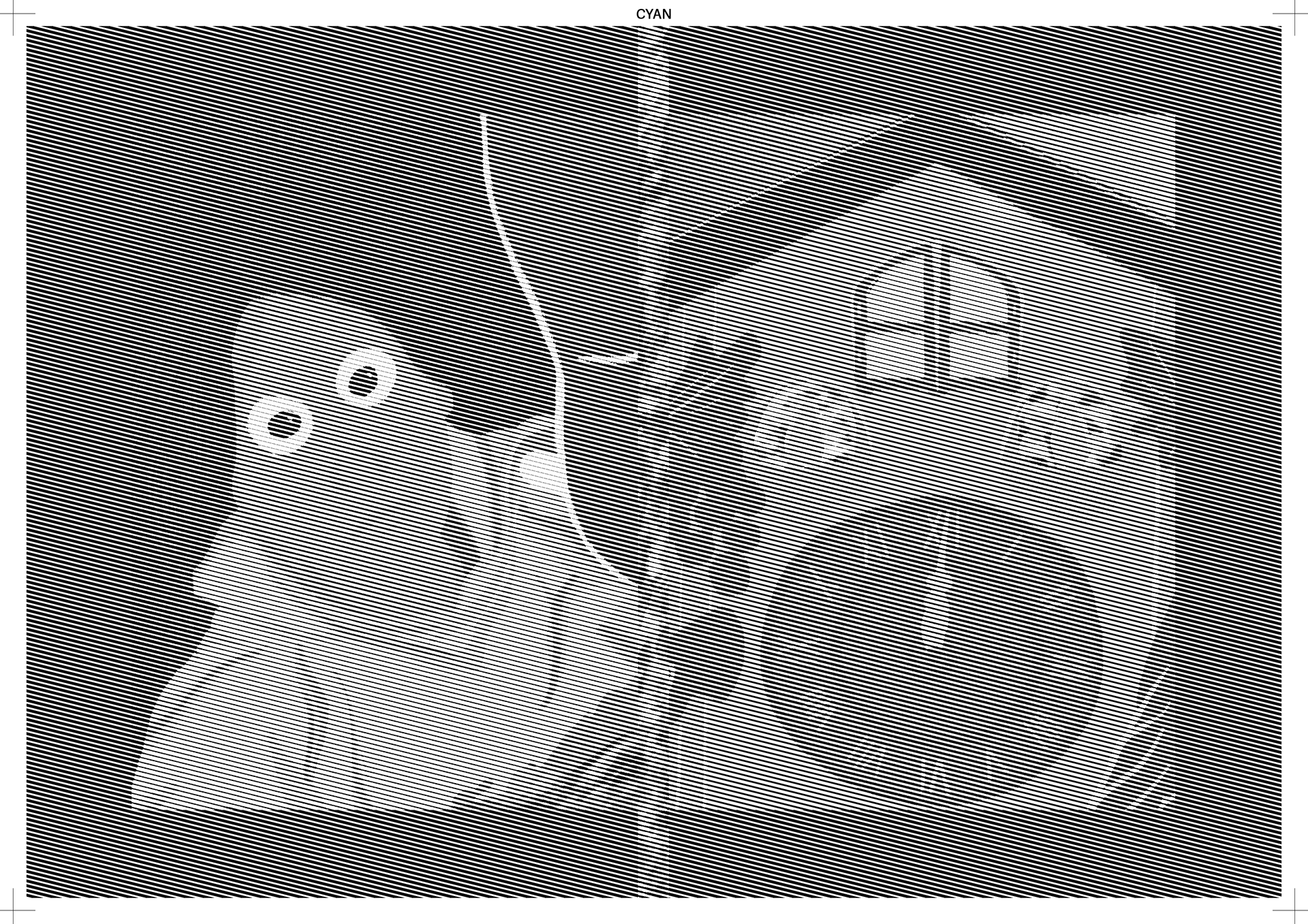
Cover: Cyan bitmap
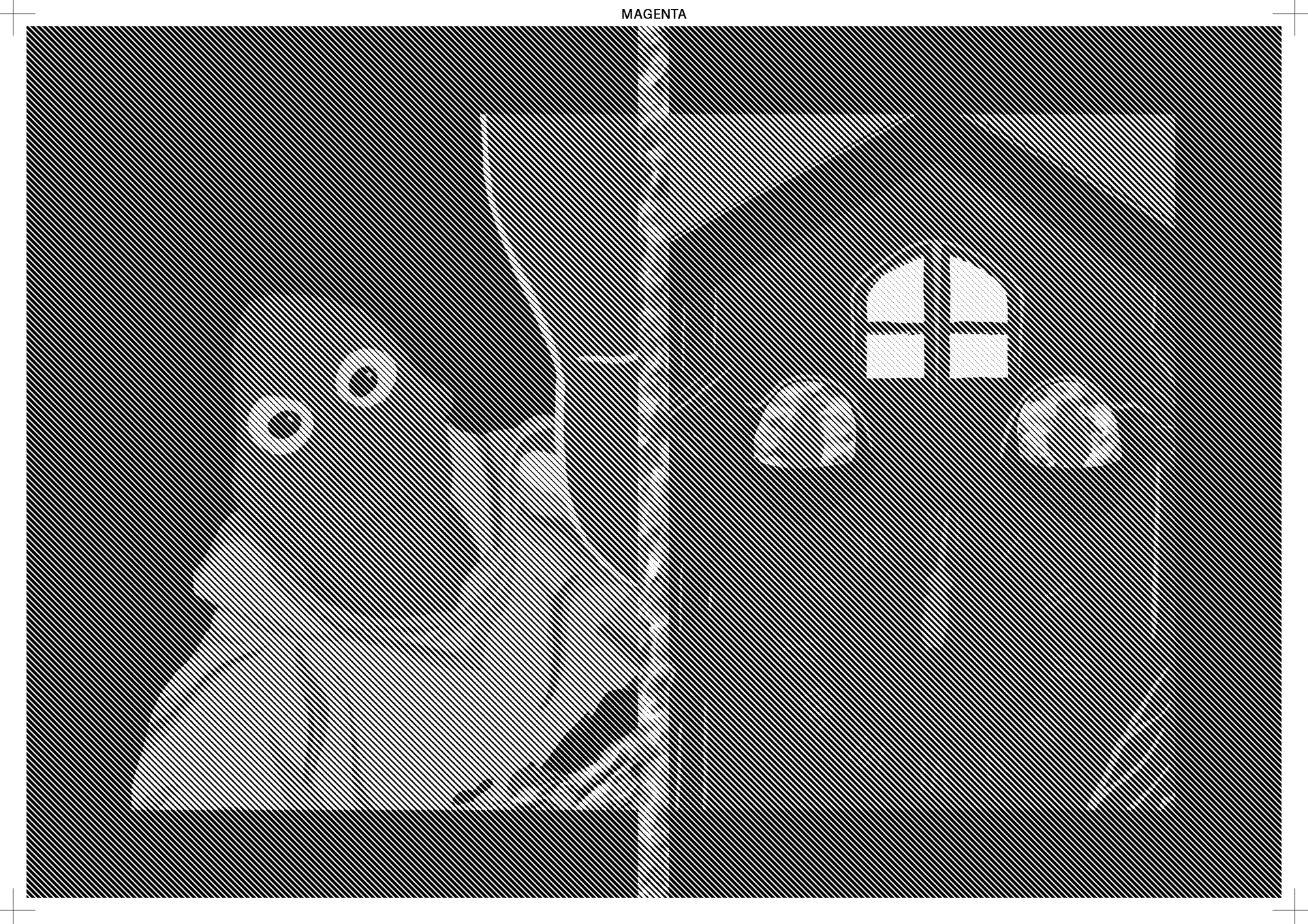
Cover: Magenta bitmap
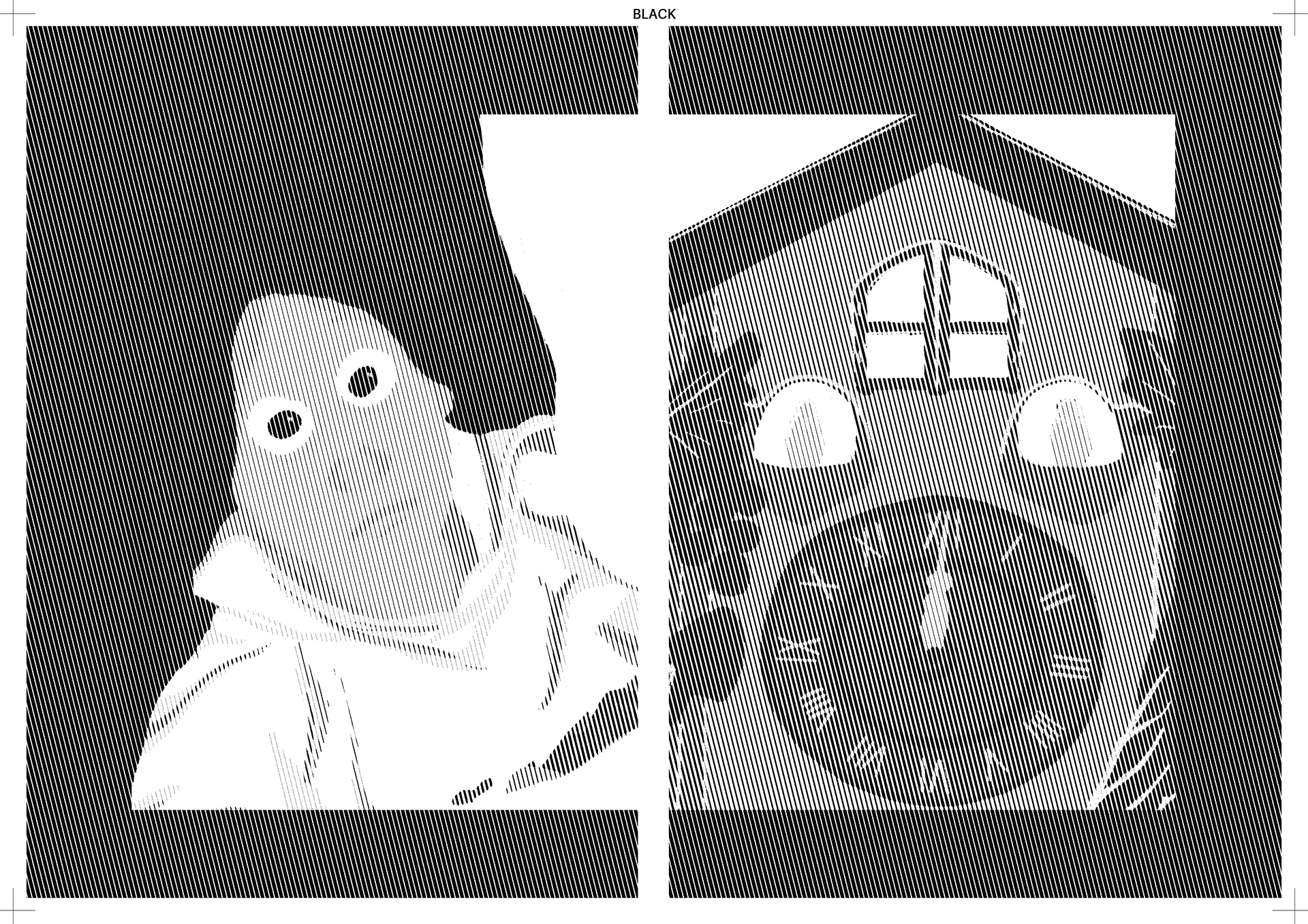
Cover: Black bitmap
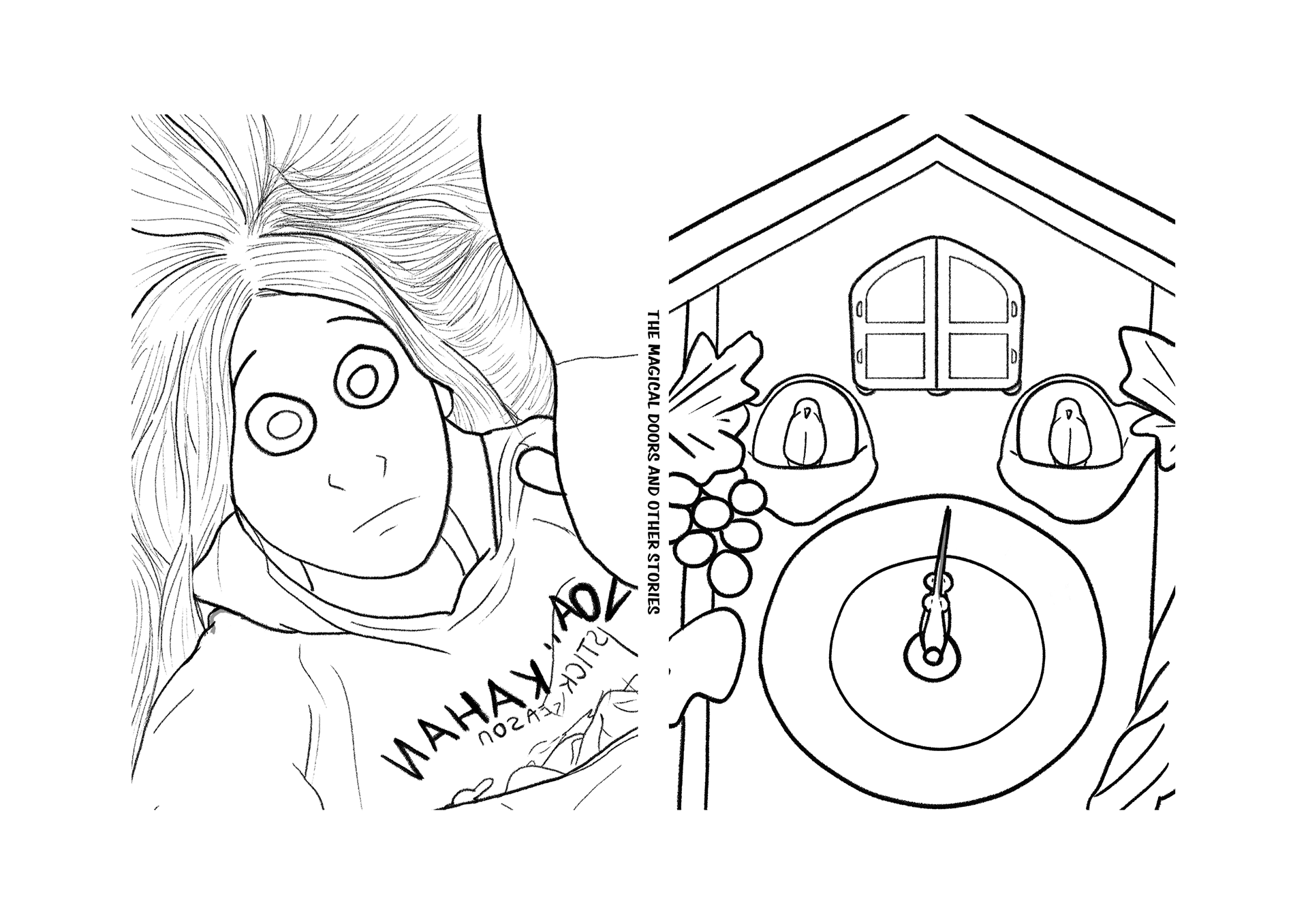
Cover: Linework layer
Screenprinting Process:
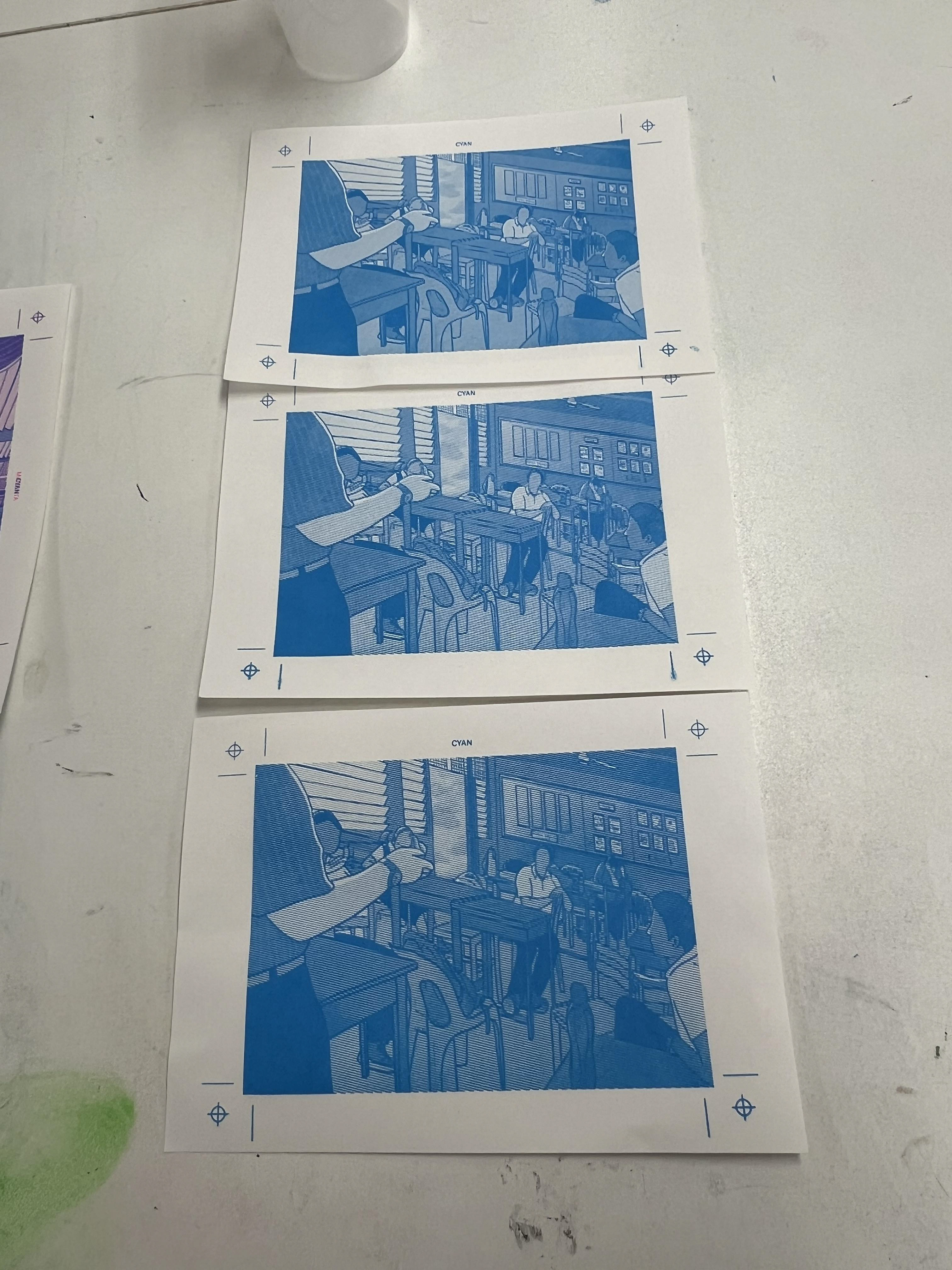
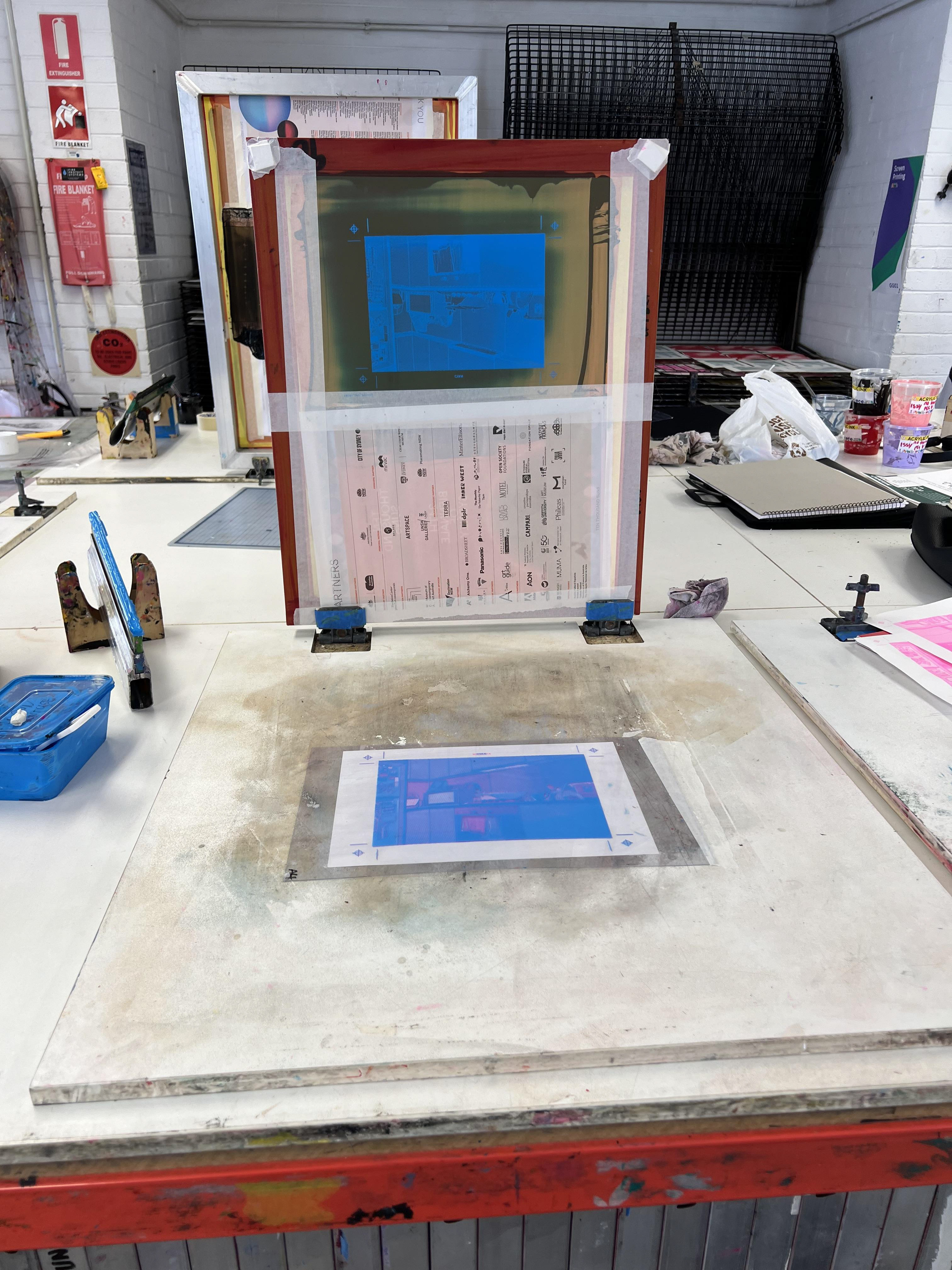
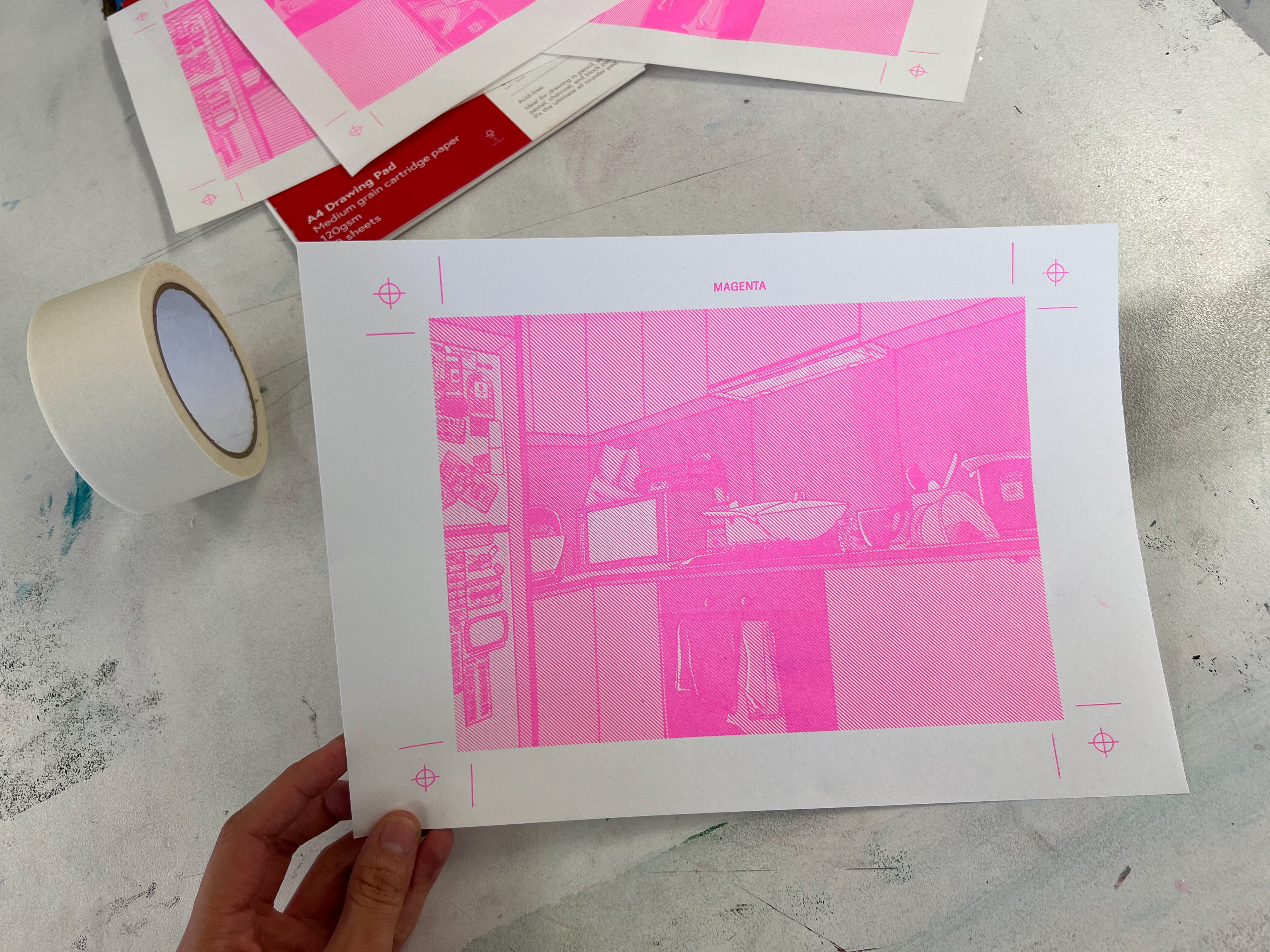
Bookbinding Process:
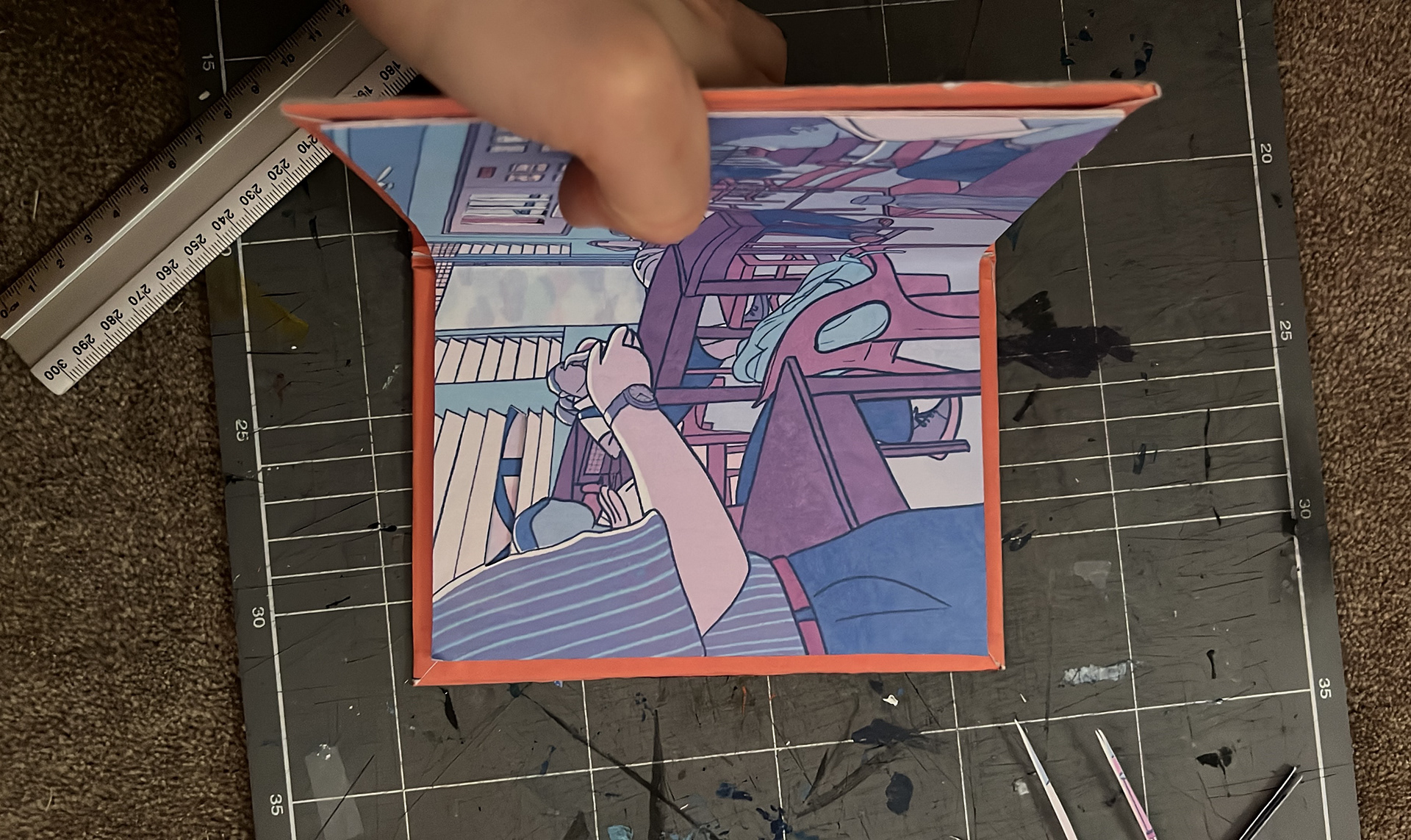
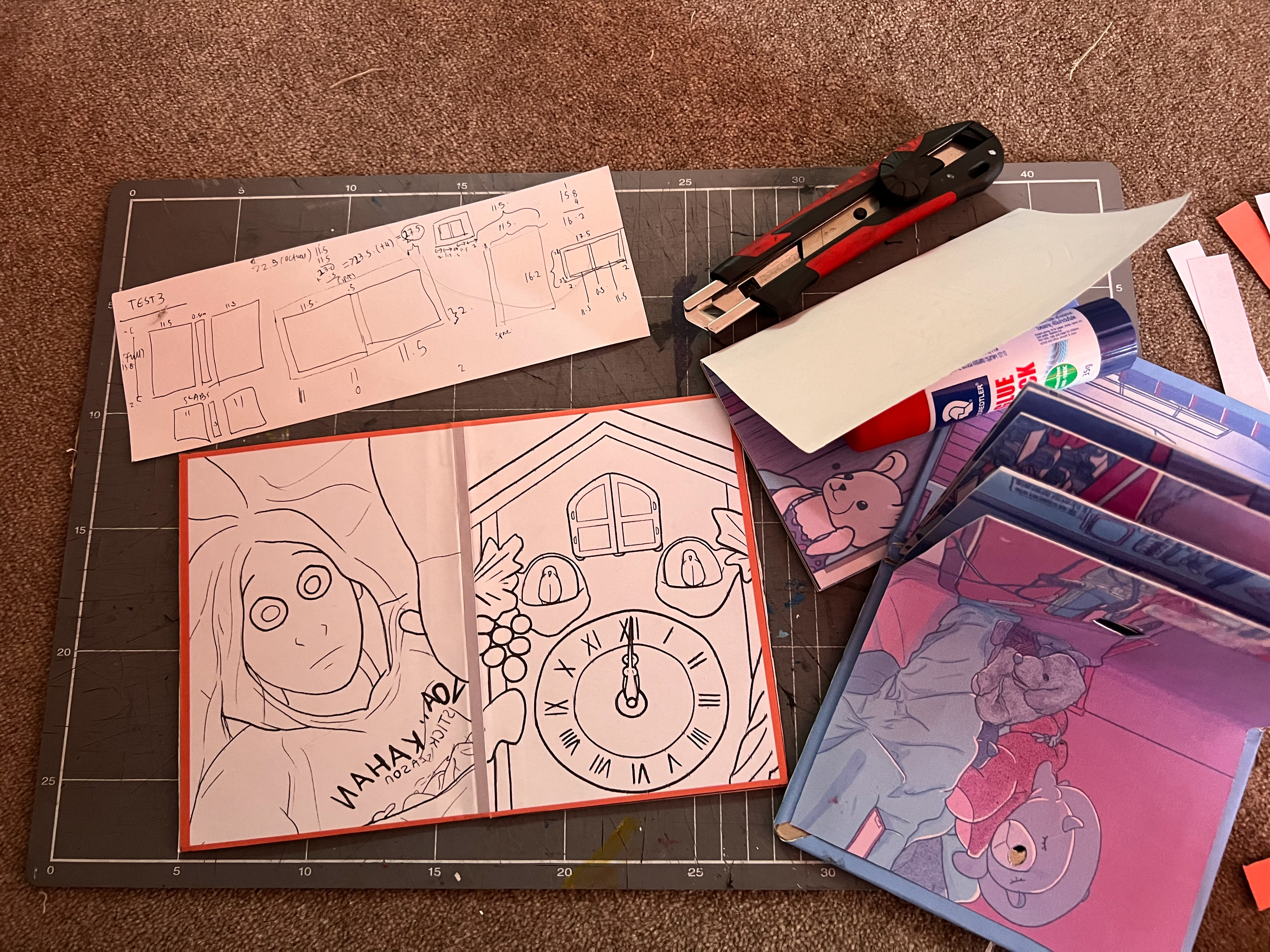
The bookbinding process was extremely tedious, as I wanted my pages to lie flat without a crease from the center seam. To create the layflat book, I carefully aligned and glued the pages together before laying something heavy over it so it lay perfectly flat.
I struggled with having the front and back pages perfectly flat, though, as the end pages always wanted to move when the book was opened and closed, affecting the first and last scene. After a lot of experimenting, I finally came up with the perfect spine width, cover slab length and spine-cover gap, yielding a pretty good result in my final book (final product photos above show that pages lie pretty flat!).
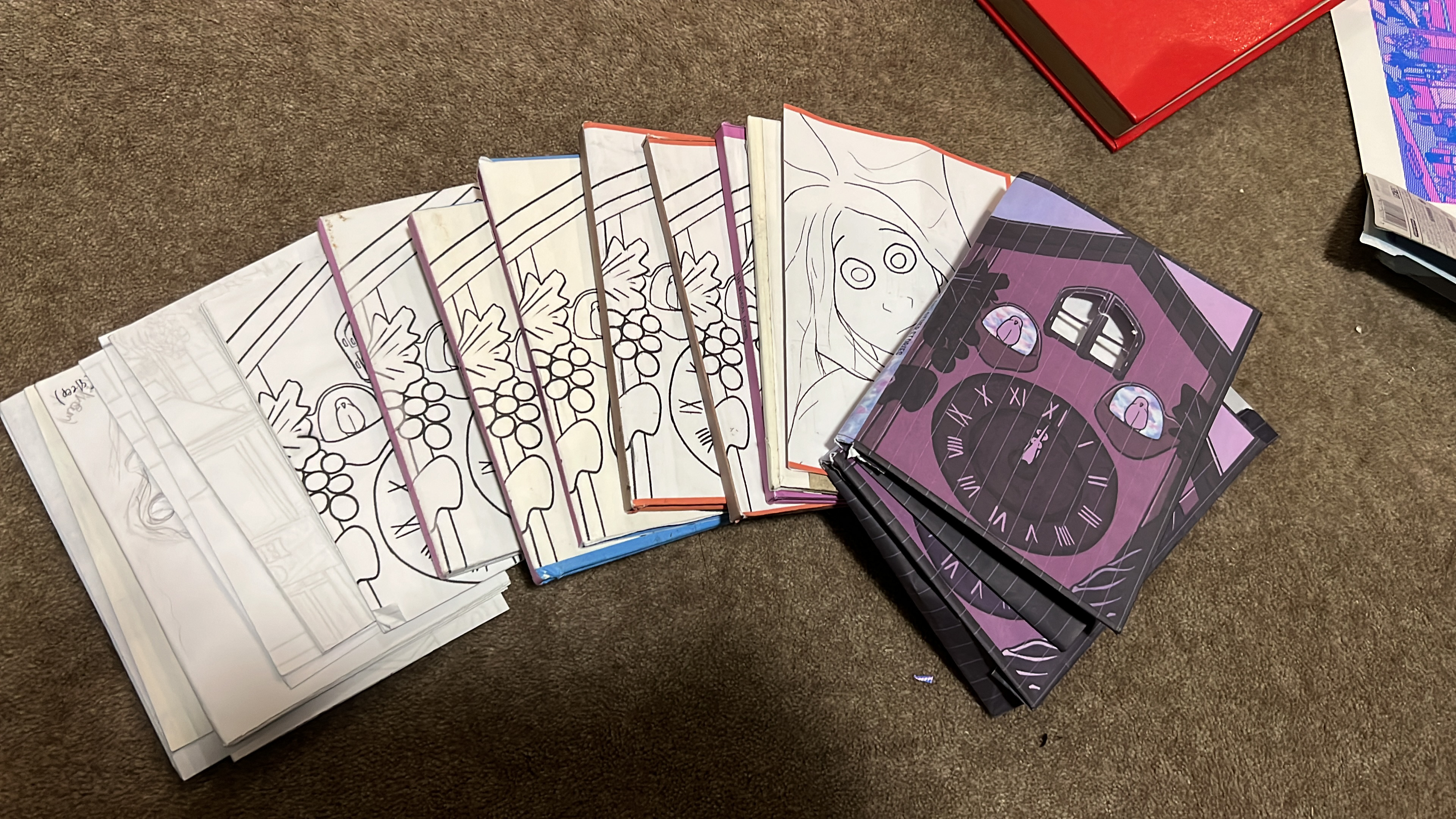
Iterating process- concept to bookbinding process.
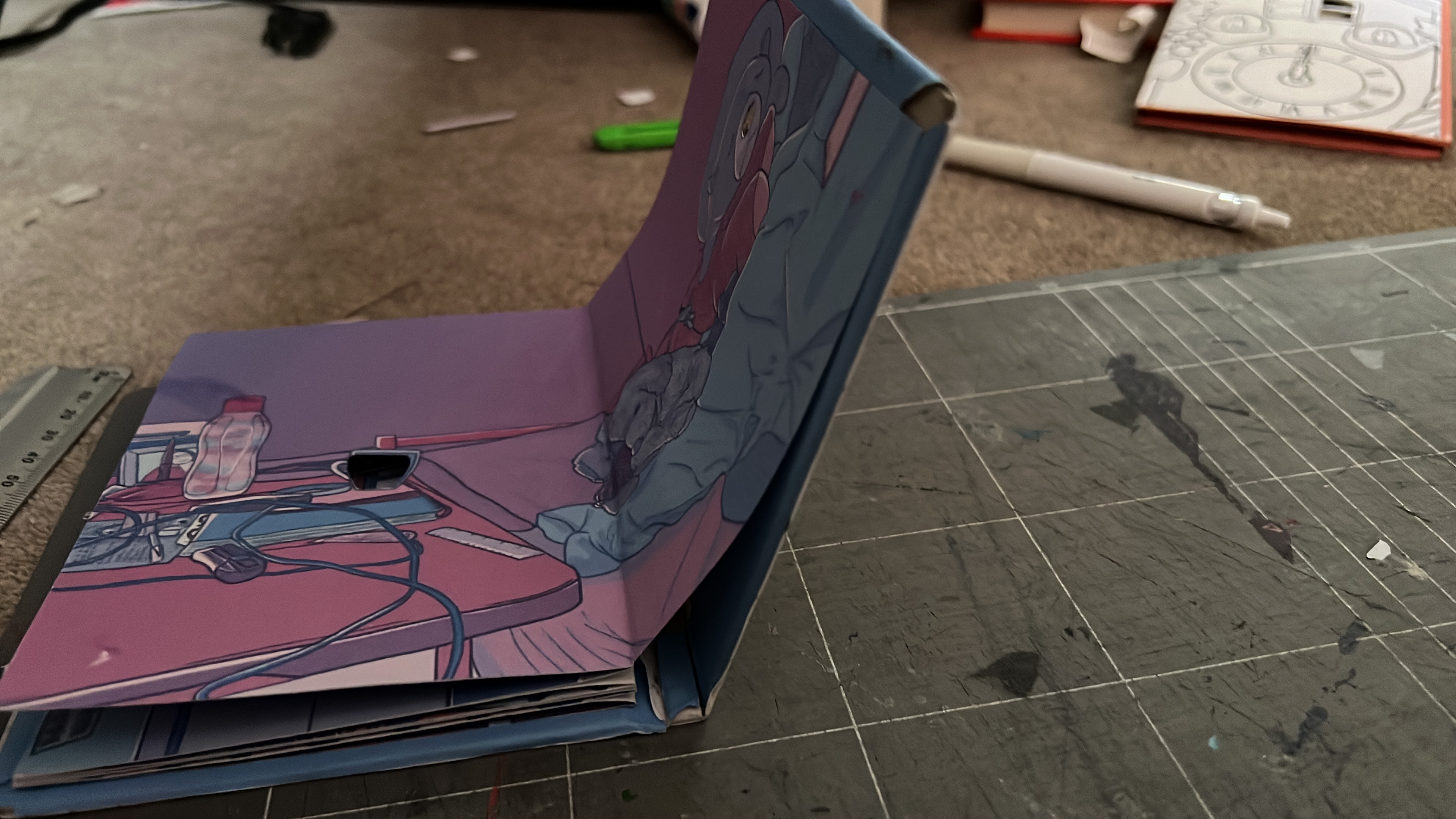
Initial tests: First and last page could not lie flat, thus cutouts were misaligned.